   |
Cyprus
September 11, 2007
The winds remained light to none existent and we motored steadily north towards Cyprus. Around 1000 hours we
|
were overflown by a
military jet that passed directly
over us, before making a sharp
turn and heading back to the west.
At 1240 hours Annette was dozing
in the cockpit when a second jet
fighter came screaming in, just a
couple of hundred feet off the
deck. It looked like Tom Cruise in
the cockpit. The jet tore by our
masts before making a very tight
low level turn and reversing it's
course. I was too busy trying to
turn the camera on to see it's
markings but the Cypriot customs
officer said the only people
around here with jet aircraft
would be the Americans. Just
saluting our big, new "Stars and
Stripes" flying off the stern.
Probably fortunate that we didn't
fire the SAM 3.
At 1200 hours I called the marina
at Limassol who said that they
were fully booked, had no space,
did not know about our e-mail
reservation. We
spent the next 30 minutes
frantically coming up with an
alternative cruising plan
involving illegal overnight
anchorages and navigation to
Turkey, before calling the marina
again. This time they were able to
confirm that they did indeed have
a space for us. Phew!
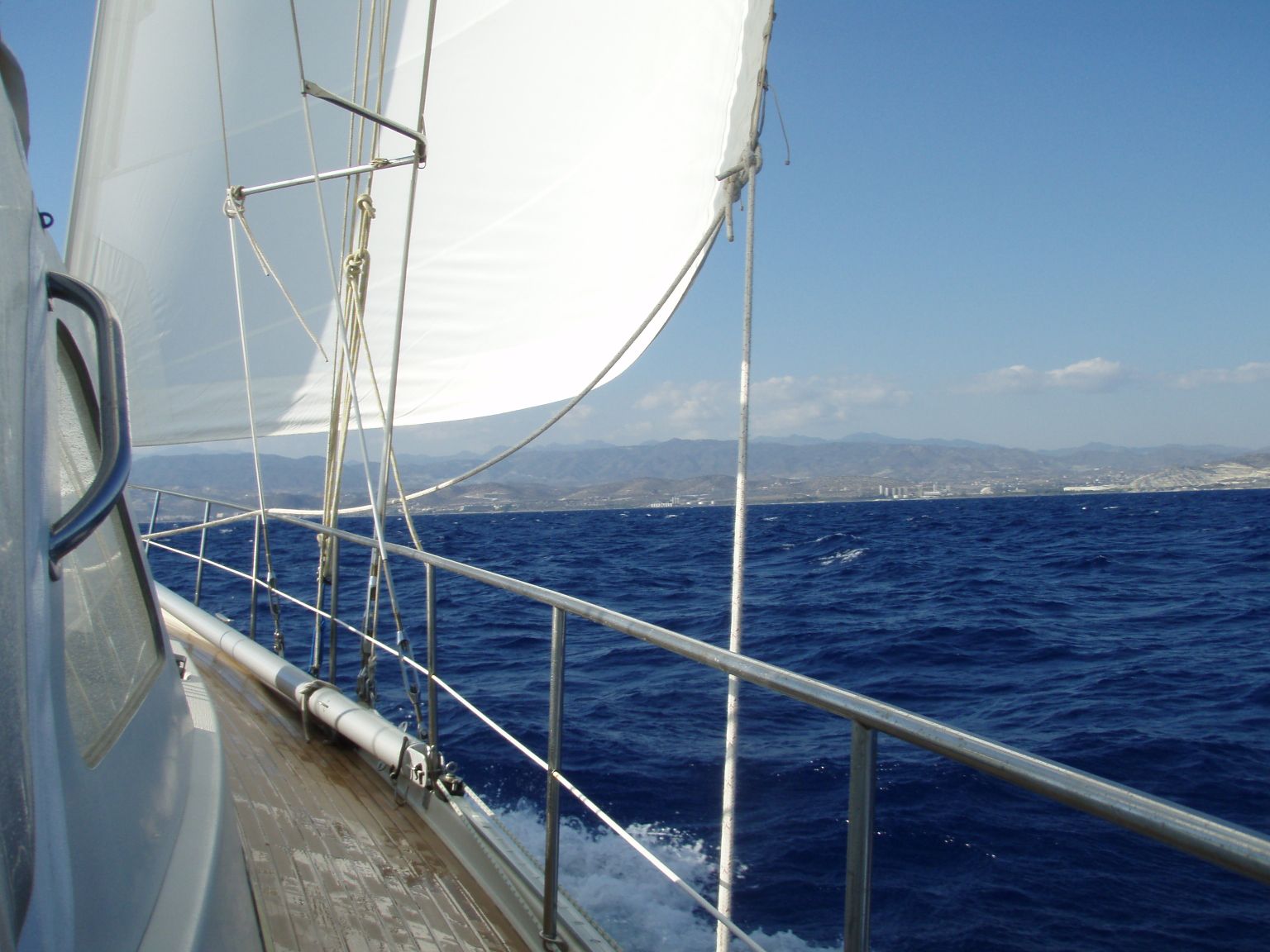
The wind had now begun to build
from the west and for the first
time in quite a while, we were close
reaching under full sail. As we
closed the Cyprus coast, we went
to a beam reach and approached the
marina at 9 knots in the
stiffening breeze. We entered the
marina through it's rocky, narrow
entrance and had three dock
helpers grabbing lines as we came
alongside. Impressive! We are used
to being ignored and handling the
lines ourselves. It was right on
1700 hours - marina closing time -
and we were surprised and pleased
that the customs and immigration
authorities cleared us into Cyprus
immediately. We are here! St.
Raphael Marina, Limassol. N 34
42.6' E 033 09.9'
September 12, 2007
As
we approached the Cypriot coast
yesterday, we could see high
mountains reaching down to white
sand beaches and the blue sea of
the Mediterranean. Annette said
that she never realized that
Cyprus was mountainous. I said,
"Of course it is. Anything
remotely Greek has lots of
mountains. Didn't you watch
Anthony Quinn in 'The Guns of
Navarone?' "
We rented a car this morning and
set off to town to find an ATM.
The marina is five miles east of
the town of Limassol. Limassol is
the second largest town on the
island and seems to cater almost
entirely to the tourist industry.
As we drove along the sea frontage
road, we passed cafes and bars in
the hundreds, a multitude of
holiday apartment blocks and
hotels and a distinctly English
orientation to the advertising,
with "Fish and Chip" shops and
cafes touting English breakfasts.
We equipped ourselves with cash
from an ATM and stopped for
breakfast at a small cafe. My
"English Breakfast" with sausage,
bacon, fried egg, baked beans and
toast was fine. Annette ordered
spaghetti and when it finally
arrived, she pronounced it
disgusting. Hey, ya gotta' order
the local fare!
Downtown city center Limassol has
a medieval castle and we paid this
a visit. Supposedly Richard the
Lionheart, leader of the 3rd
Crusade, married Berengaria of
Navarre here in 1191. I hope that
the lucky couple did not find the
attendant as aggravating as we
did. When we arrived, we were
followed closely by same, who lost
no time to chastise us for
touching a glass display cabinet
and for taking photographs. What
on earth was the problem with
photos? There was little on
display, just a few examples of
Byzantine ceramics. Fortunately
another set of tourists arrived
and he was able to devote his
attentions to them. The view from
the castle battlements was fine
but there was little else to hold
our interest.
We drove out to the west of
Limassol along "Lady's Mile
Beach". This was the beach off
which we had intended to illegally
anchor if denied space at the
marina. The beach was entirely of
pebbles, not so good for
sunbathing and
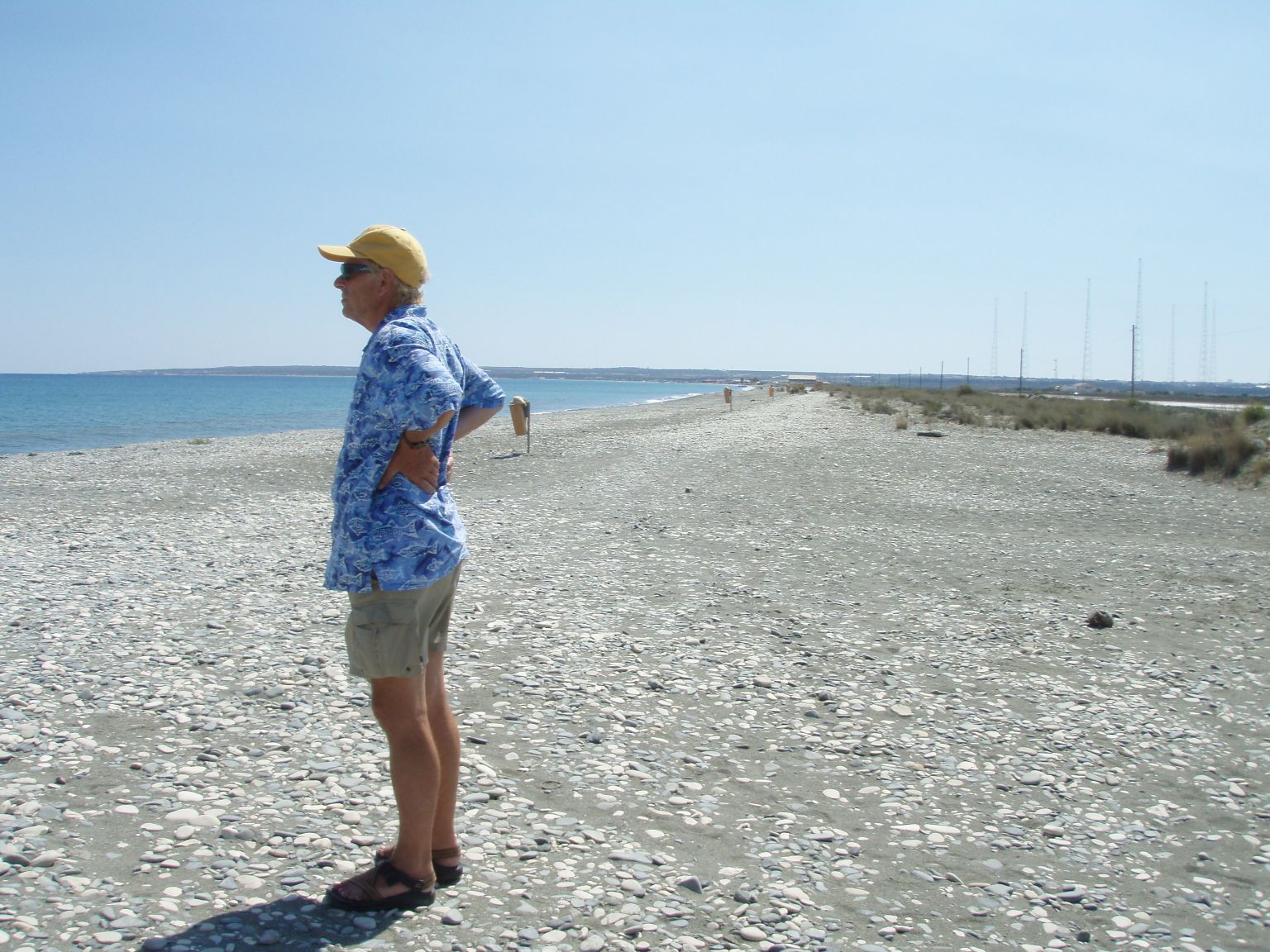 |
swimming but perfectly shaped rocks for throwing. We searched for the monastery of "St. Nicholas of the Cats". The young lady at the information bureau had said that it was "interesting". When we arrived we found a chained gate and a sign entirely in Greek. Annette maintained that any signage that did not include English was not expecting visitors. Later that evening, I read in the tourist brochure that the monastery chapel dates to the 14th century. It was abandoned in the 16th. century and reoccupied by Orthodox nuns just 20 years ago. The guide notes that at the time of the monastery's founding, there was a severe drought which drove the local inhabitants out of the region. In their absence the area became infested with snakes. (So what were the snakes living on?) Constantine the Great sent a commander (Kalokeros) to Cyprus to sort out the snakes and he released thousands of cats to exterminate the snakes. (Right...I would have immediately thought of cats to get rid of snakes...) What St. Nicholas had to do with the cats was nowhere mentioned.
September 13, 2007
Today was winery tour day. Really,
there only so many ancient,
crumbling ruins you can view
before you must get serious. We
drove our rental car up into the
Cypriot mountains along narrow
winding roads. The roads hugged
the
edge of precipices and the
villages themselves often hung at
cliffs edge without visible means
of support. It was
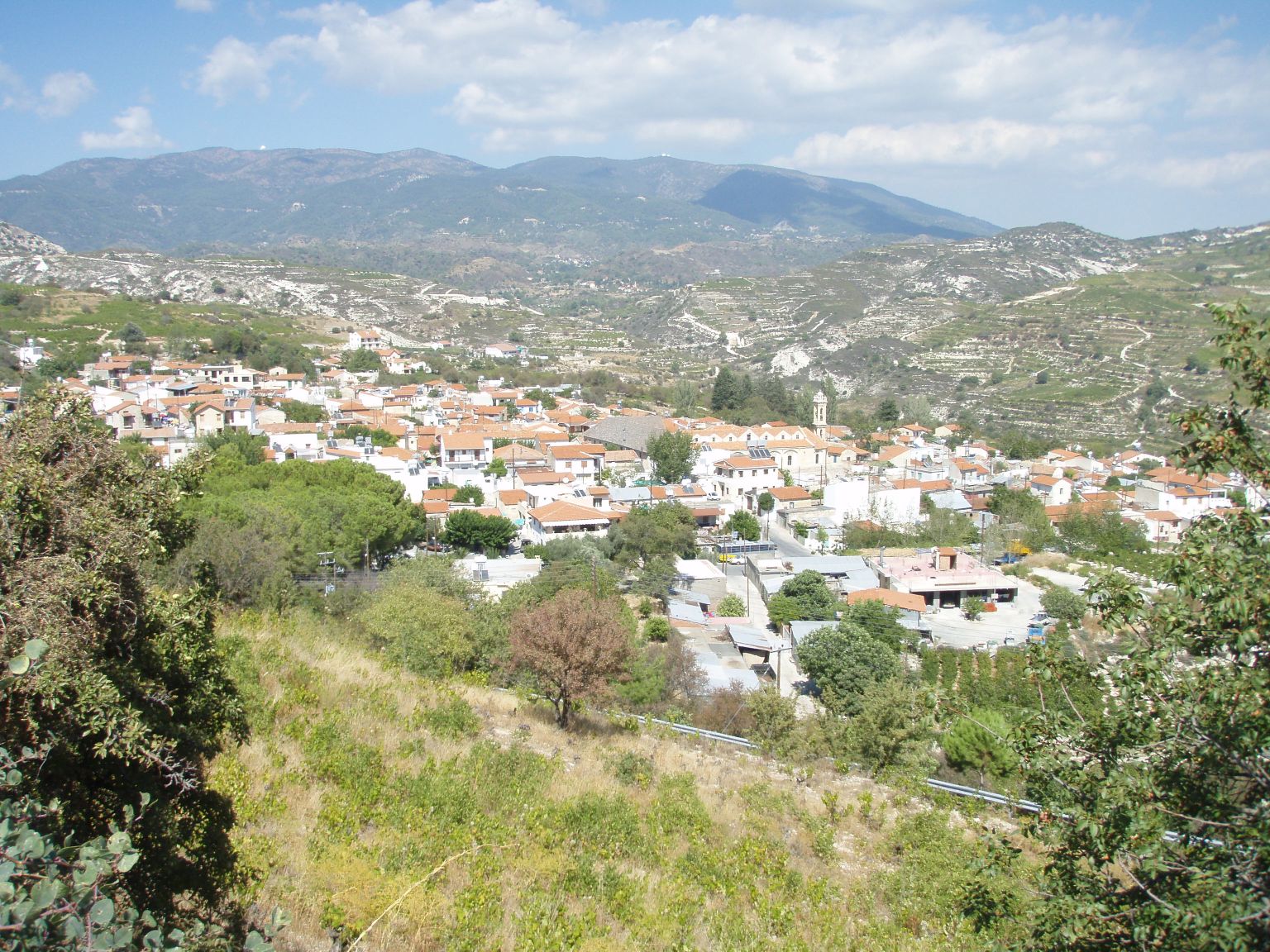    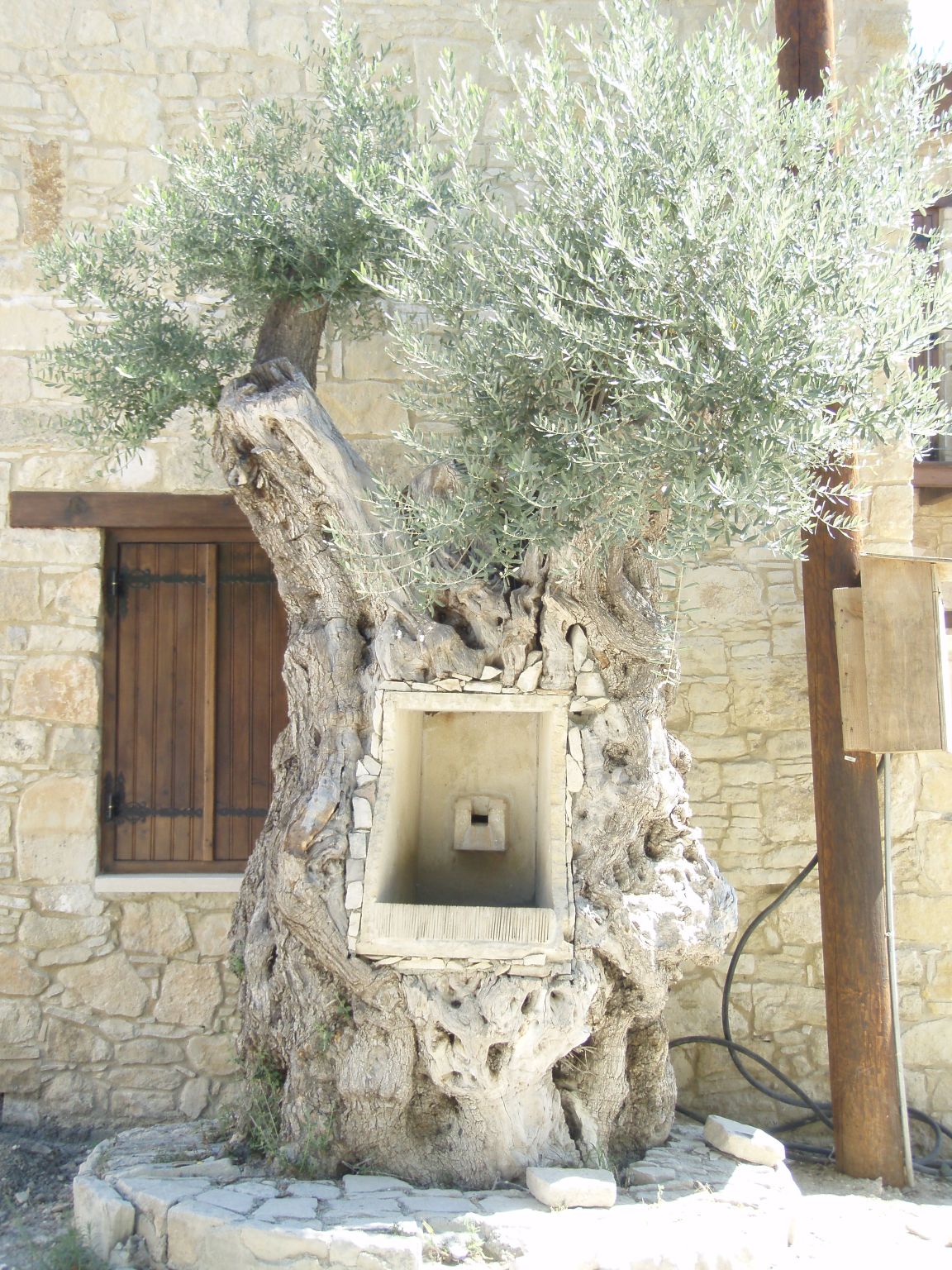  |
noticeably
cooler as we got higher, with
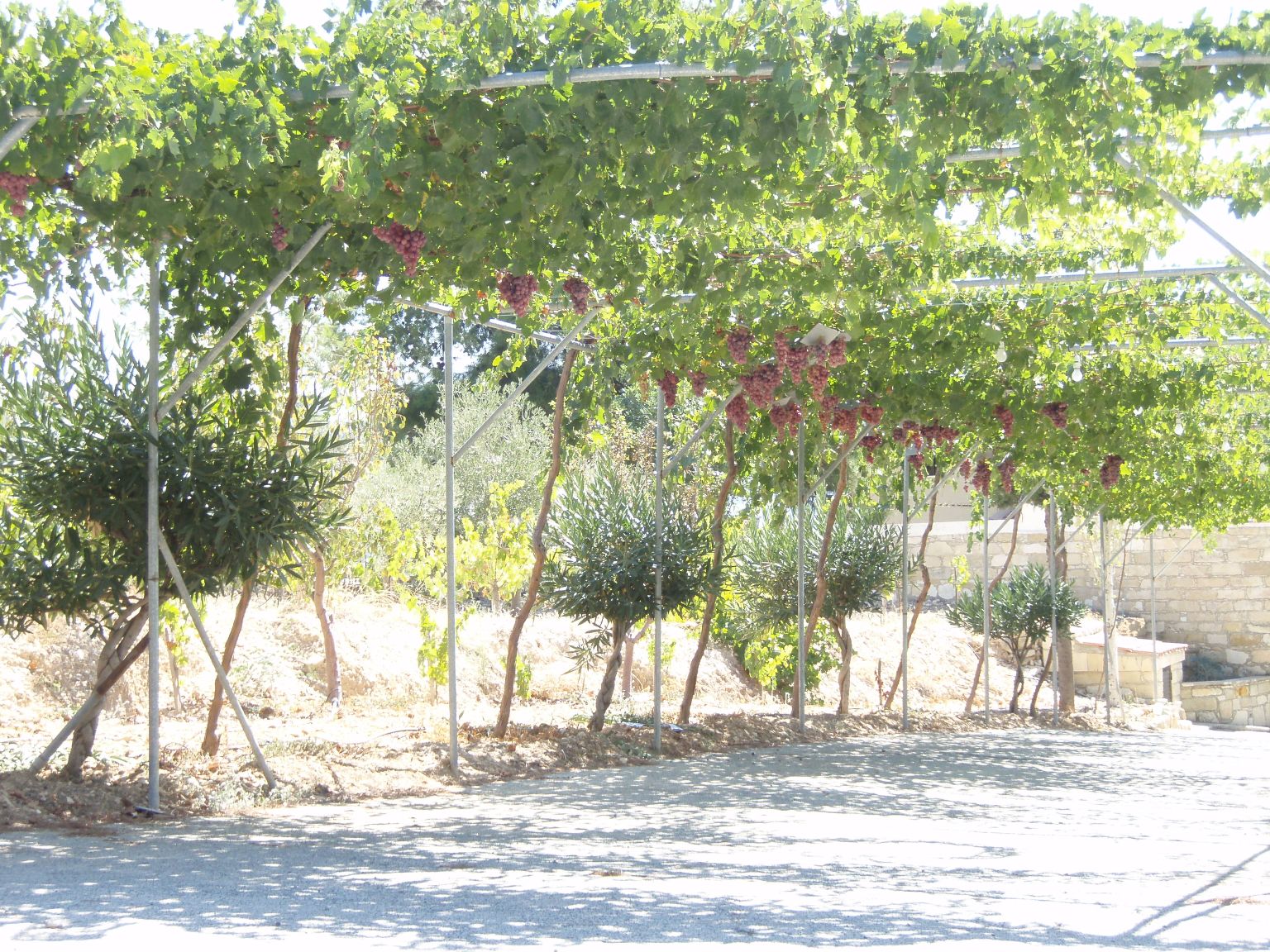
trees and vineyards replaced the
arid fields of the coastal areas.
We
saw a sign for a "traditional
village" and turned into the
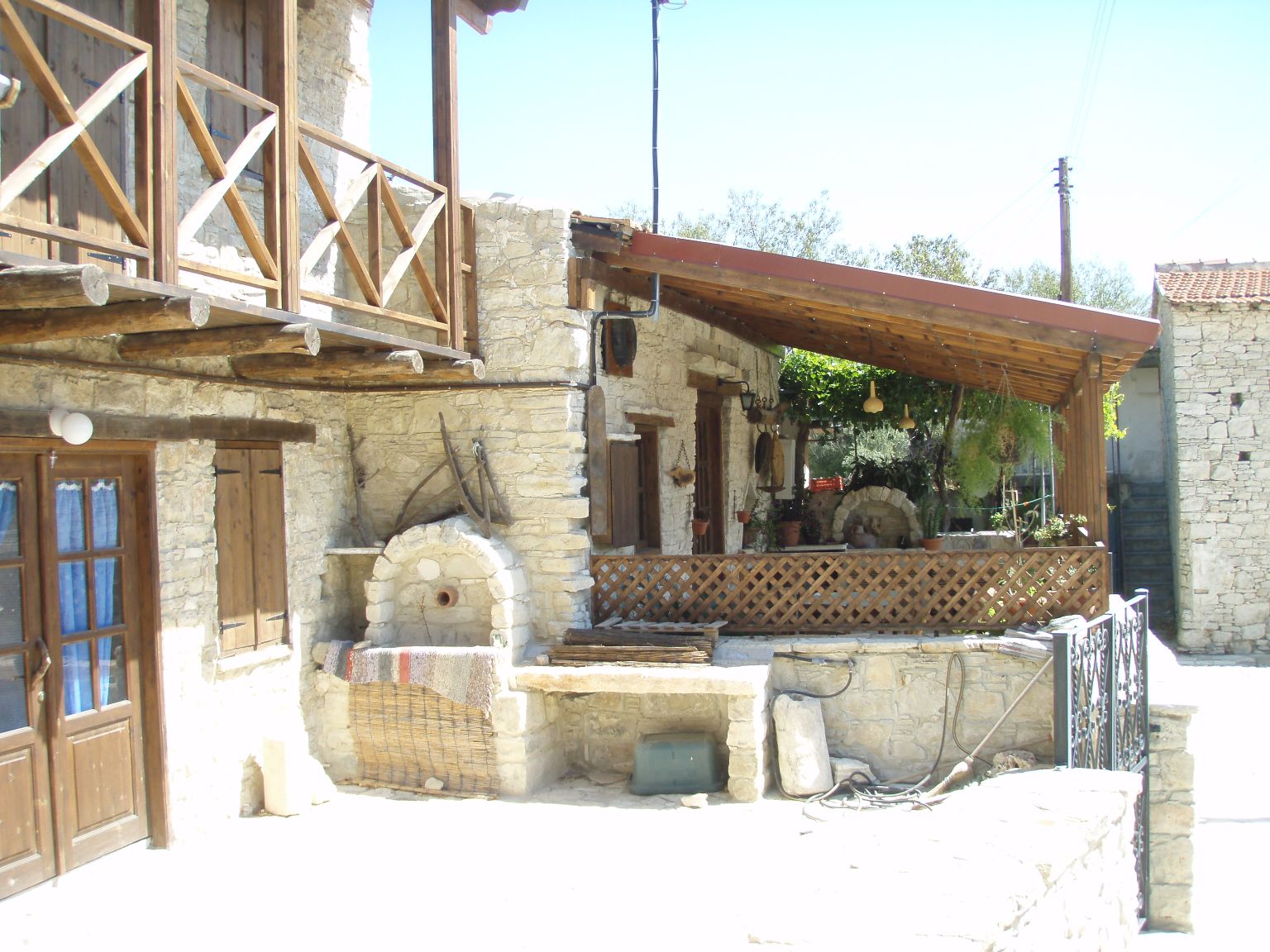
sleepy village of Silikou. The
streets were just wide enough for
a single vehicle but fortunately
there was no other traffic. After
parking we wandered around the
tiny village square and had a
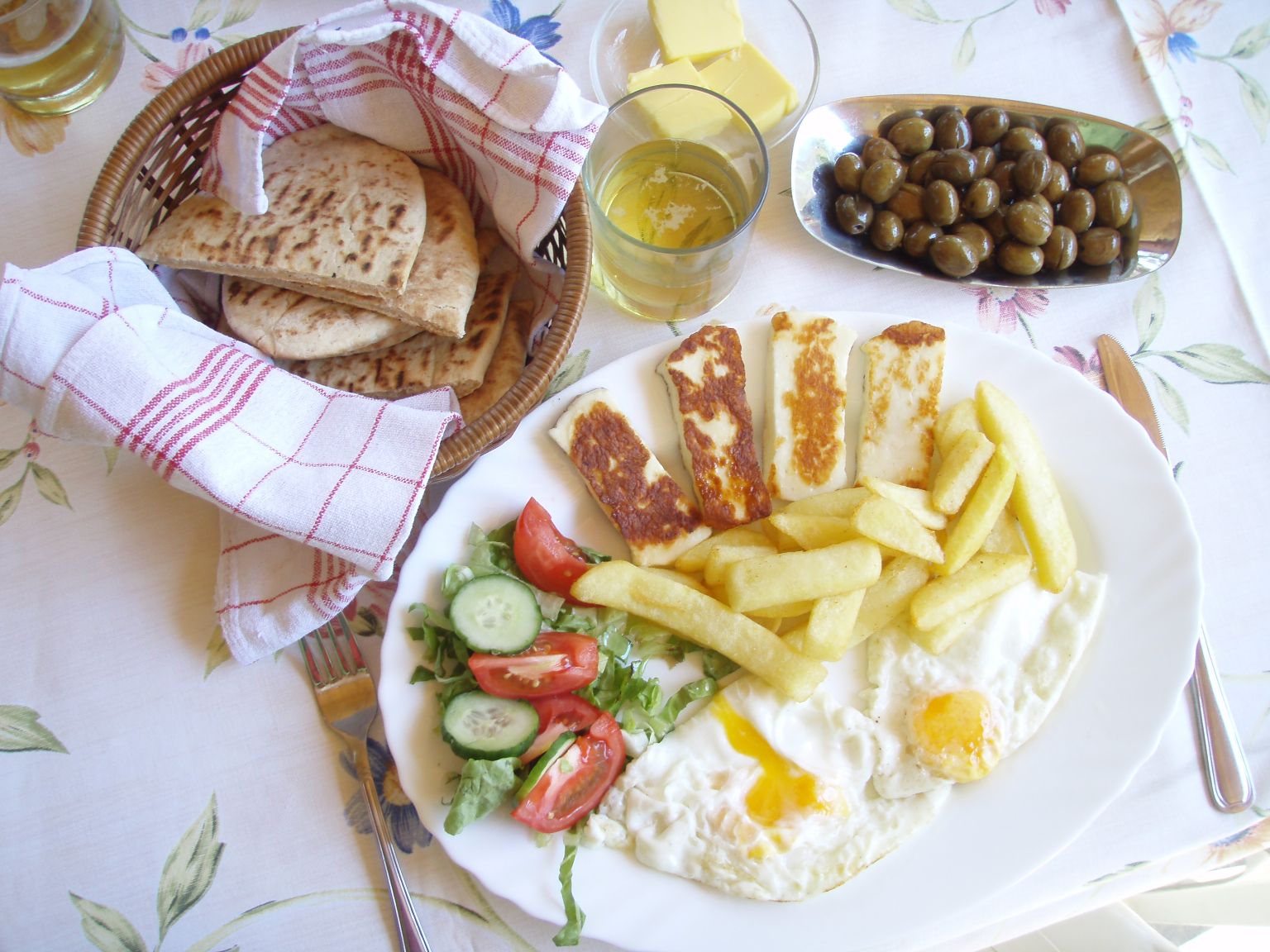
truly wonderful brunch at the
village inn (Fried eggs, fried
potatoes, fried cheese, olives,
salad, fresh baked hot Pita bread
- plus "Keo" beer of course!).
The lady innkeeper insisted on
calling her friend Nicos, two
villages over, who was in the
process of wine-making and agreed
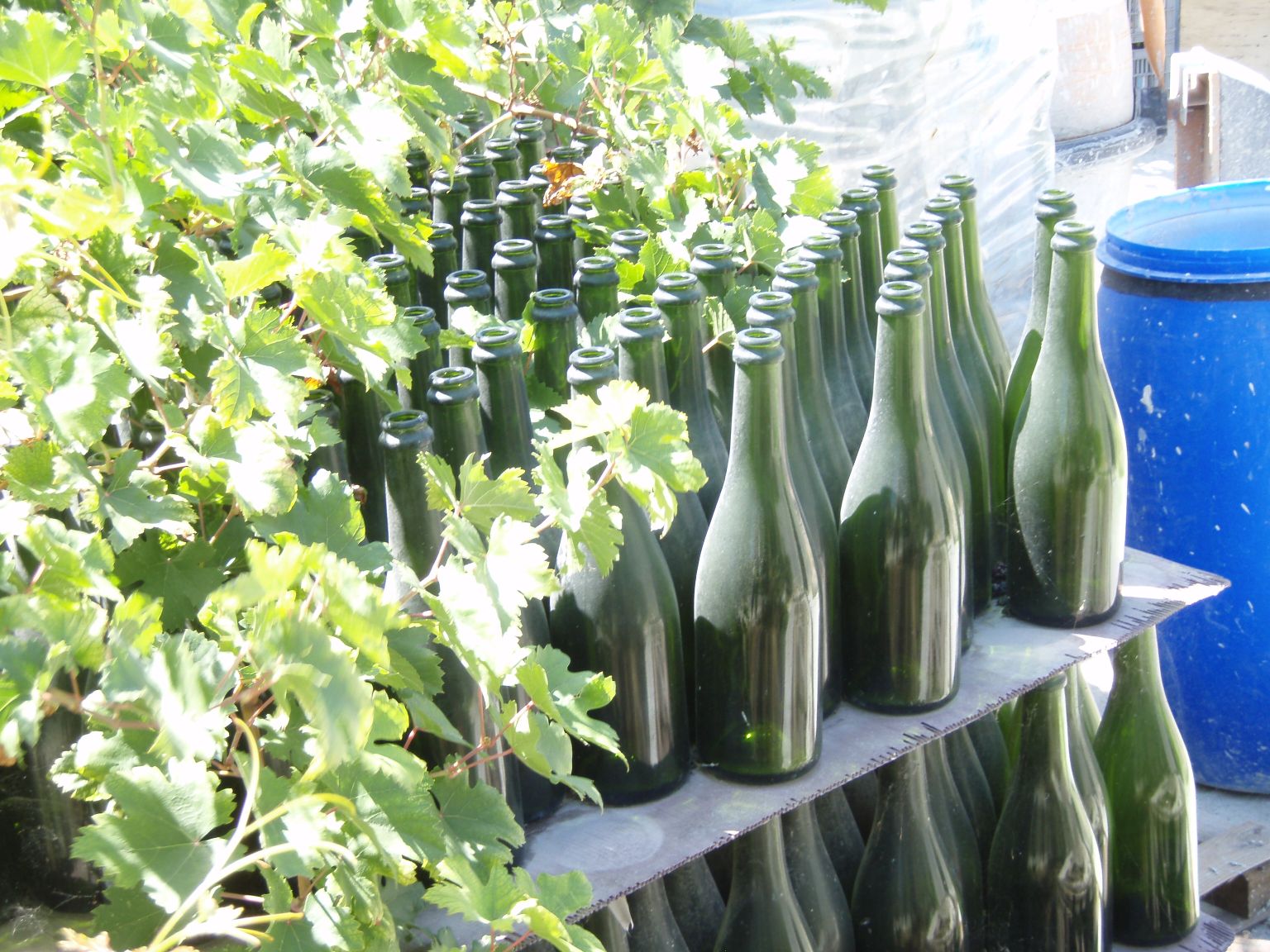
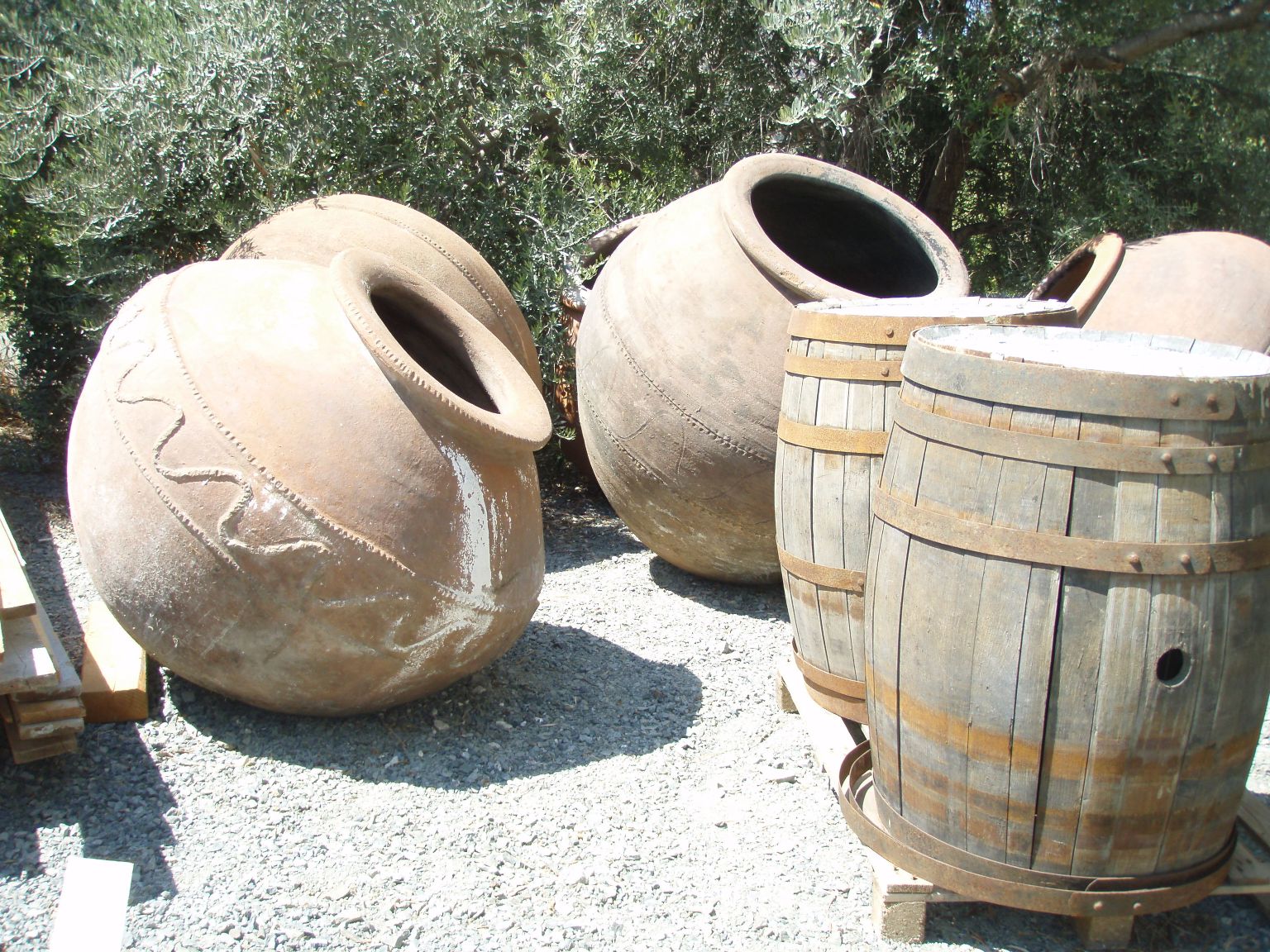
show us his winery. The winery was
a wonderfully untidy jumble of
palettes of empty wine bottles,
huge ancient clay jars that would
have easily contained the 40
thieves plus Ali Baba, wooden
barrels, old grape presses and the
like, all mixed up with modern
stainless steel equipment. Nicos
welcomed us into his kitchen
and excused himself for a few
minutes as he completed his
discussion with "a government
official". The conversation was
Greek to me but the official was
obviously from the Cypriot IRS. I
wanted to interrupt and
   |
advise
Nicos to fight it to the Supreme
Court, appeal, offer to settle for
ten percent etc. but since the
nature of the complaint was
unknown to me, I wisely withheld
such sage admonishments.
Eventually, the IRS man left and I
told Nicos that in the USA we have
an expression, "Hello, I am from
the government and I am here to
help you!". Nicos said, "You
understand completely". We tasted
some wine and then moved along on
our tour.
There was a lot of real estate for
sale and some very pretty
locations. The innkeeper had asked
us earlier if we were from the
village and clarified her question
by indicating that many of the
village residents were British
retirees.
September 14, 2007
Cyprus has been a challenge for internet connectivity which we found surprising. The Limassol marina is occupied by large powerboats that rarely move from the dock and has little space for visitors. We detected three different WiFi wireless networks and purchased time on two out of the three. The first was the marina network itself and we were not able to connect to it, despite hauling our notebook computer from one end of the marina to the other. The second network belonged to the hotel that owns the marina. We found their US$8.50 per connection (maximum one hour) expensive, since we have been spoiled by free WiFi access across the globe.
 |
Nevertheless we bought
three "connections". After two
days the marina acknowledged that
their modem had been turned off!
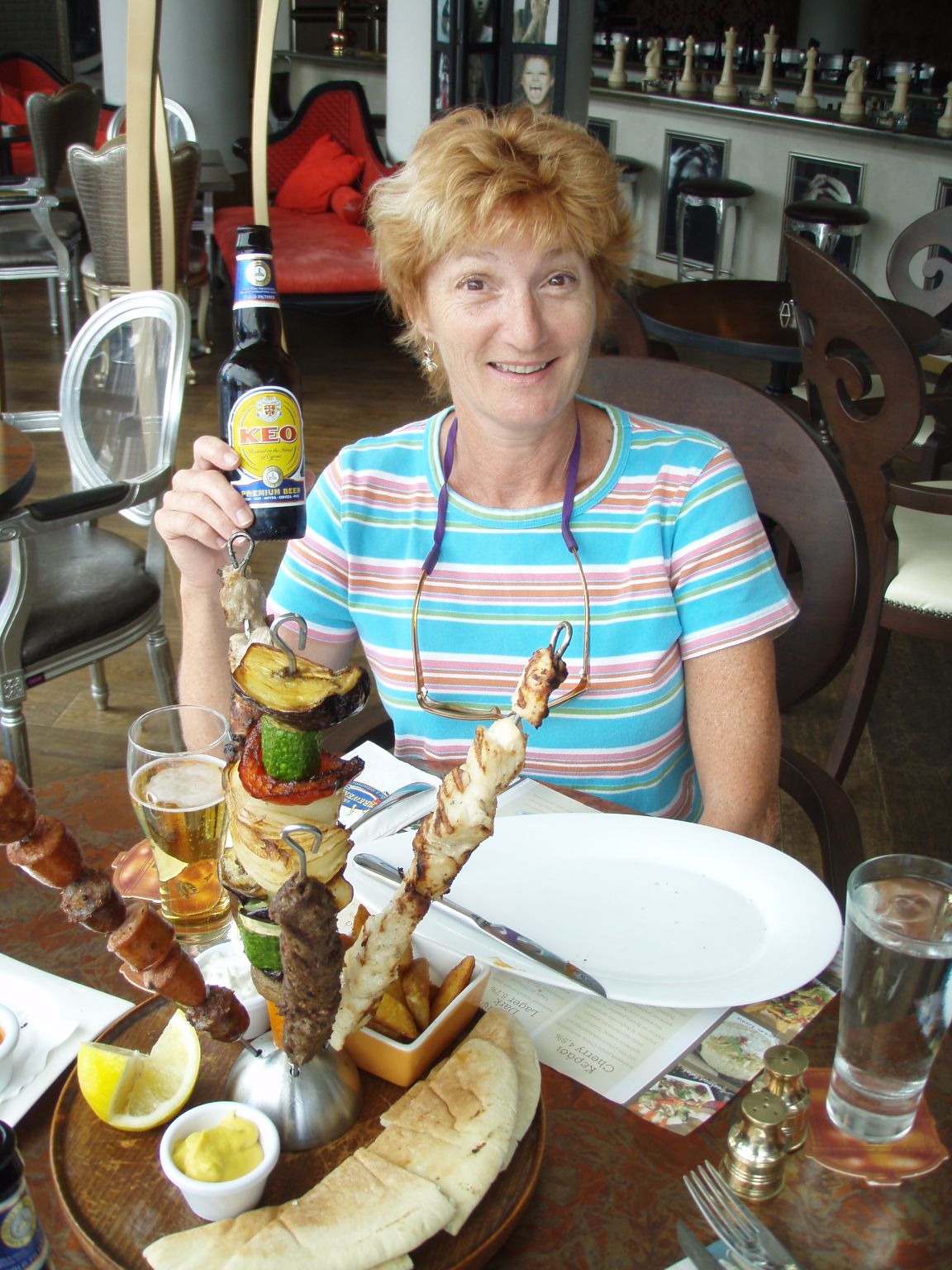
We assuaged our irritation with a
fine lunch of Cypriot style
grilled kebabs and spent the
balance of
the day wandering the gift shops
and looking at real estate
offerings.
September 15, 2007
Today we visited the capital of
Cyprus at Lefkosia (Nicosia). As
we drove into town we could see a
huge Turkish flag outlined on the
hillside behind the city, just to
remind anyone who didn't know
already, this is a divided city in
a divided country. The history
behind the division is simple
enough, as are most religious and
tribal wars. The country of Cyprus
achieved independence from Britain
in 1960 and there were three
guarantor powers, Britain, Greece
and Turkey. The population at that
time was split 78% Greek, 18%
Turkish, plus 4 % Armenian and
Maronites, scattered all across
the island. The Greek version of
history states that although the
constitution safeguarded the basic
rights and freedoms of all
citizens, it contained provisions
that were "non-workable". In 1963,
the Greek-Cypriot president
proposed constitutional amendments
that the Turkish side rejected. The
Turkish side then withdrew from
the government and set up their
own club. In 1967 there was a
military coup in Greece. This
ruling junta then staged a
military coup in Cyprus. The
Turkish army invaded Cyprus almost
immediately and grabbed 37% of the
island. They then displaced
200,000 Greek Cypriots from their
side and presumably a
proportionate number of Turkish
Cypriots were kicked out of the
Greek side. They have been whining
about it ever since and I noted
that the newly elected Turkish
President Abdullah Gul is in the
process of visiting Cyprus on a
State visit. Since the diplomatic
world is more concerned that Gul's
wife is wearing a Moslem headscarf
whilst accompanying him on a State
visit, we may be safe in assuming
that no big changes in Greek
Turkish relations are to be
expected soon.
We drove up to the walls of the
"old" city and found barbed wire
and signs warning us of a "UN
buffer zone". Since nobody was
waving guns, we entered the old
city and maneuvered our way
through the narrow streets until
 |
we found a spot where we could
abandon our rent car. We then
hiked to the tourist information
center. We found this deeply
buried in "gift" shops, which
slowed progress considerably. The
tourist center provided us with
the
information that the only
establishment open on a Saturday
afternoon was the Archaeological
museum. Just about every other
museum or art gallery is closed on
Saturday afternoon and all day
Sunday. We decided to visit the
Archaeological museum.
The Archaeological museum was
sparsely attended and was
nonetheless very interesting.
Cyprus has historically been a
really good place to die and have
all of your household implements
buried with you. It was amazing to
me
of the degree of sophistication of
the pottery and ceramic
decorations from nearly 5,000
years ago. Annette was fascinated
with "diaper pins" or "safety
pins" in copper and gold that were
4,000 years old and instantly
recognizable as to their function.
Perhaps folks in the early bronze
age used these pins for their toga
like wraps and used velcro for the
kids. The historical record does
not clarify this.
On our return to Limassol, I
realized that I had yet to enjoy
that great British gift to
culinary excellence, "fish and
chips". We set out to find a
"chippie", with precise directions
given to us by a fellow marina
resident. The directions
terminated at a road barrier and
diversion sign. We wandered around
the village beyond but never found
the grail of the "best fish on the
island". Instead we opted for
"Molly Malone's Irish Pub" on the
main tourist drag. Annette loved
her "Guinness and Beef Pie" and I
made do with a poor imitation of
fish and chips.
September 16, 2007
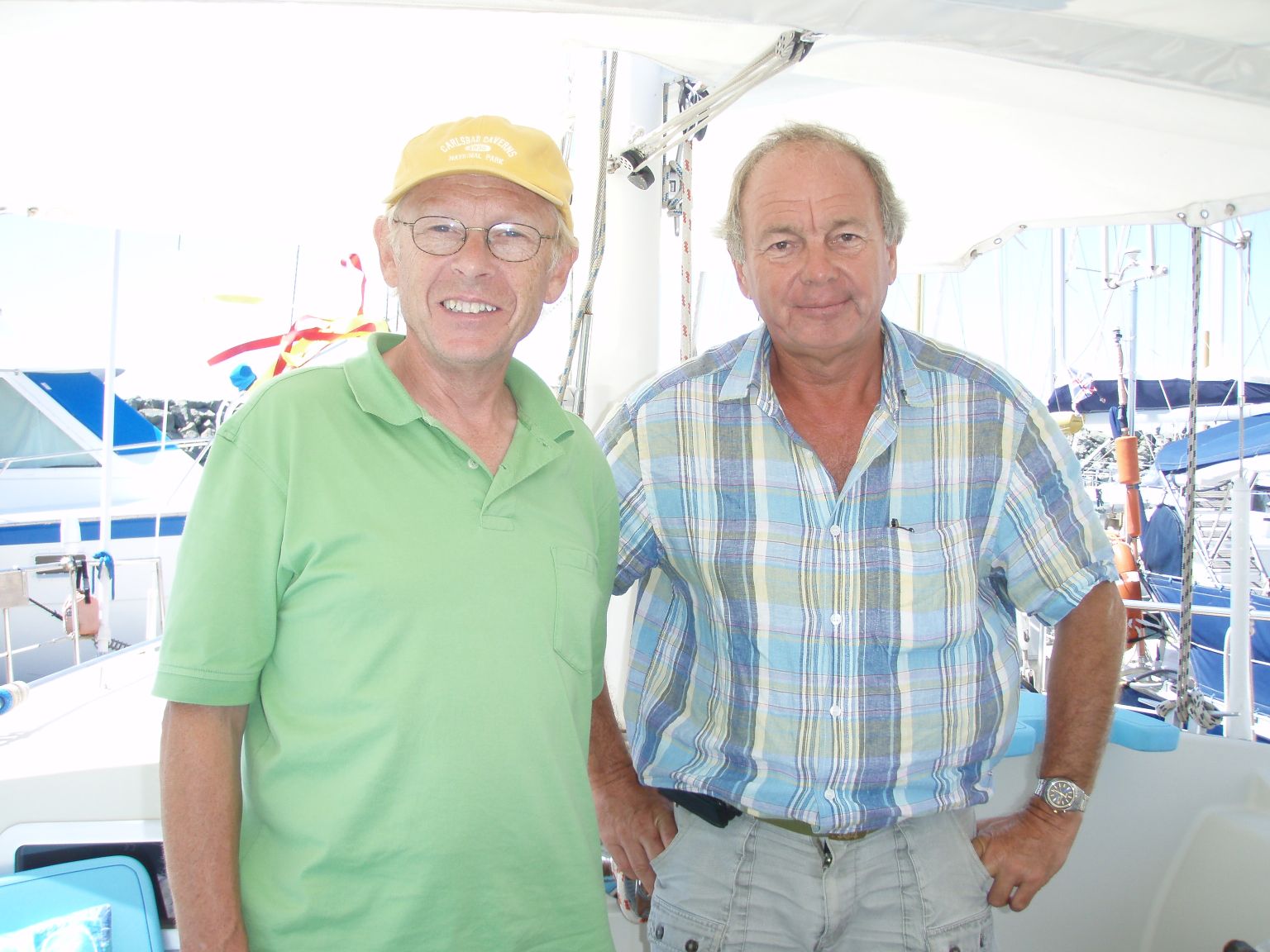
The rental car was returned this morning and we are reduced to being pedestrians again. Fellow Amel owner, Ian Shepherd, drove his motorcycle over from Larnaca, where he lives and we had a brief, pleasant and useful visit.
 |
We have now serviced our port Genoa sheet winch and it is clicking away happily again. Doodlebug is again prepared for sea and the only task left was to check the internet for the latest weather. I had saved my final US$8.50 internet access code for this task. The internet would not connect! The hotel's server was down!
September 17, 2007
Yesterday we had warned the marina
security police that we wanted to
leave at first light, since we
needed to retrieve passports and
clearance documents from them.
Again we were assured that they
operated on a 24 hours basis. We
woke at about 0450 hours and made
the first round of tea and coffee
in the darkness. At 0530 hours I
walked over to the security office
and asked for my documents. "You
are leaving now?" "Well, in about
30 or 40 minutes. It will take me
that long to stow the power cords
and the passarelle (the boarding
ramp)." "You come back here five
minutes before you leave". "How
the hell I am I going to get off
the boat with the boarding ramp
stowed?". "The other shift begins
at 0615 hours. You leave then."
"No, I am leaving now". Grudgingly
the security officer handed over
our documents. Fifteen minutes
later he was standing on the dock,
glowering at us from a few feet
away, as we stowed the final gear
and made ready to leave. I almost
laughed out loud at his obvious
discomfiture. There was nothing
the officious twerp could do as we
had already stowed the boarding
ramp and were protected by a moat
of seawater.
We motored quietly off the dock at
0600 hours and headed out to sea
with winds of less than 3 knots.
By 0900 hours we were off the main
British airbase on Cyprus and had
aircraft circling us every few
minutes, just in case we began to
launch Exocets or something. From
noon onwards we were able to carry
a little sail to boost the motor,
as the winds were from the beam
but in the 6 to 8 knot range.
There was a lot of shipping during
the night and the radio was filled
with non-stop chatter of either "Nato
Warship" or "Israeli Navy", asking
different radar targets to
identify themselves. When the
"target" did not respond, they
repeated the call ad nauseam,
until we were ready to scream. We
are just not used to this level of
non-stop chatter on the VHF
hailing channel, some legitimate
and a lot of long and illegal
conversations in various
languages, presumably by
fishermen. I say "illegal" because
the International hailing
frequency is supposed to be used
for just hailing and then the
connecting parties switch to
another agreed frequency to talk
at length. Eventually we just
turned the volume way down and
ignored the radio. The newer
technology radios also have a
"siren" or alarm than can be
sounded in the event of an
emergency. The siren sounds
continuously until the recipient
responds or answers. Our siren
alarm went off twice during the
night for what were routine
maritime announcements regarding
weather forecasts and navigation
alerts. Most commercial vessels
have now disconnected or turned
off this important safety feature
because of the widespread abuse of
the alarm feature by various
authorities around the world.
