


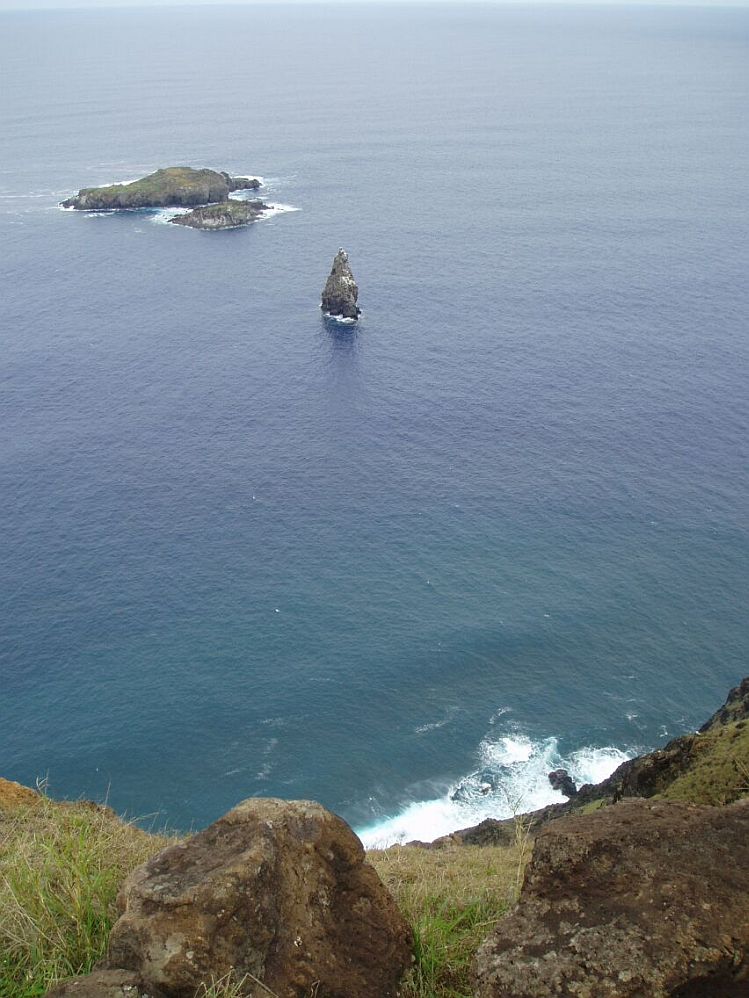


Easter Island
June 20, 2004
Today we abandoned DoodleBug into the care of Chantier Navale boatyard and headed for the airport. We had made arrangements to leave the rent car at the airport and had stopped by earlier to ensure that there really was an agency desk there. When we arrived at the airport, the agency desk was deserted but we were reasonably early, so we checked in for our flight from Raiatea to Papeete and got our boarding passes. Still no-one at the agency desk. I telephoned the company. "You must return the car to the main office". "But I made specific arrangements to leave the car at the airport". "Yes, you come to the main office and we will drive you to the airport". Ho-hum. We had plenty of time anyway.
June 21, 2004
The flight to Rapa Nui left at 0100 hours and took five and a half hours arriving in mid morning. I was astonished to realize that we were now back in the same time zone as New Mexico. In fact Easter Island is almost the same longitude as Santa Fe. It is the same latitude South, as Corpus Christi is North and thus the weather is similar to Corpus Christi, Texas in mid-winter. We found a hotel, lunch, and crashed for the remainder of the afternoon. We had met a Swiss gentleman, Gerhard (Gary) Klein staying at the same hotel and he invited us to join him on a tour of the island the following day. He was very dignified and reminded us of Max von Sydow in the movie "Three Days of the Condor."
June 22, 2004
We visited some half dozen sites on the island today with "Claudia" our tour guide. Several of the sites we visited were featured in the Kevin Costner movie "Rapa Nui". That evening we went to the hotel next door to view a showing of "Rapa Nui". The total audience was only 5 people and we sat at the back of the theater where there were couches instead of chairs and ordered beer and peanuts. A very civilized way to movie-watch.
June 23, 2004
Today we left Gary to his tour and rented an ATV - 4 wheeler motorcycle. We set off to tour the South coast by ourselves. The
 experience from the previous day was quite different. The only humans we saw all day were a fisherman fishing with a hand line and a pair of surfers with a
board. We seemed to have the entire island to ourselves and wandered all over the different sites along the coast. From the documentaries I had seen, I had a
different idea about Easter Island than its reality. I had heard voice-overs in sepulchral tones, describing how the early visitors were awed by the huge, lonely
statues, gazing out to sea. What we found, which was indeed awesome, was that by the late 1800's, all of these "installed" statues had been cast down from
their bases during the course of internecine fighting by the inhabitants. In addition, although these statues were "installed" in groups along the
coast, they faced inwards, towards the villages and away from the sea. It wasn't until the 1950's that some of these sites were restored and the statues re-erected.
experience from the previous day was quite different. The only humans we saw all day were a fisherman fishing with a hand line and a pair of surfers with a
board. We seemed to have the entire island to ourselves and wandered all over the different sites along the coast. From the documentaries I had seen, I had a
different idea about Easter Island than its reality. I had heard voice-overs in sepulchral tones, describing how the early visitors were awed by the huge, lonely
statues, gazing out to sea. What we found, which was indeed awesome, was that by the late 1800's, all of these "installed" statues had been cast down from
their bases during the course of internecine fighting by the inhabitants. In addition, although these statues were "installed" in groups along the
coast, they faced inwards, towards the villages and away from the sea. It wasn't until the 1950's that some of these sites were restored and the statues re-erected.


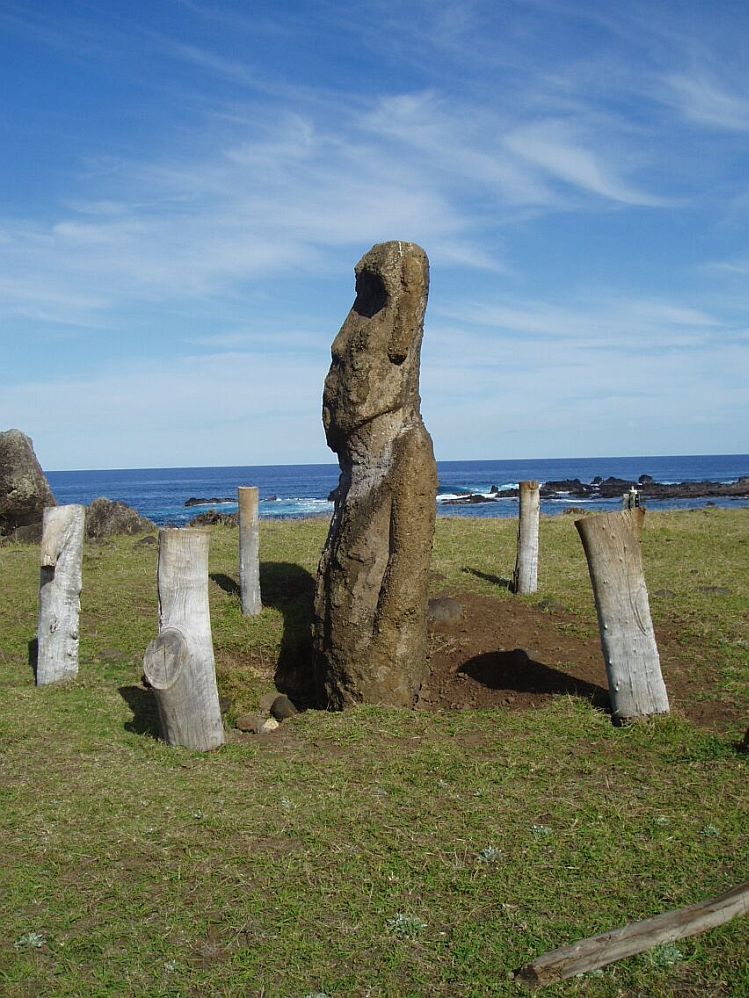

As we wandered along the south coast, every half mile or so, we would discover another site with a partially ruined stone platform and a half dozen huge stone statues cast face down. Their red stone hats or topknots, would be scattered at random over the site. The sites were generally within yards of the sea cliffs and the Pacific ocean swells crashed onto the cliffs throwing spray high into the air. The landscape is rolling, with few trees but with low volcanic craters in all directions. We sat at the base of the statues and watched the waves, warmed by the heat from the black basalt rocks. The view from the statues was of a limitless blue ocean in all directions.
Today, the population is around 5,000 - almost all concentrated in the single town of Hanga Roa. The island is roughly triangular and 14 miles by 7 miles. The movie "Rapa Nui" portrayed the inhabitants as believing that they were the only people on earth. It is believed by archaeologists that the island was colonized around 500 AD, so it seems to me unlikely that this scenario is correct. I could however, imagine the frustration that the inhabitants would feel, in that if anyone "escaped" from the island by boat, then they never returned or were heard of again. The closest land is Chile, 2250 miles to the East and Pitcairn Island, 2100 miles to the West. Since the prevailing winds and currents would take you West, not East, the likelihood of finding Pitcairn without navigation tools was extremely slim. The next Island chain would be the Marquises to the Northwest - hard to get to with the wind angle, followed by the Tuamotus. The latter are without fresh water or food source, except for a few coconuts, so the voyager would be heading for the Society chain 2,500 miles away.
The Polynesians were reputed to be great navigators but it is one thing to travel until you discover an island chain and then work out where you are in the chain and quite another to find an isolated speck in the vastness of the Pacific Ocean. The Rapa Nui volcanoes are low altitude and the Humboldt current brings cold water, clouds, and reduced visibility. This is not an island you can see 50 miles away like Tahiti. I see the pre-history Easter Islanders as trapped like goldfish in a bowl. They had destroyed all of the trees for rollers to move statues or for fuel for their fires - choose your own theory. Since at one point their population was reduced to 111 souls, it is probable that their culture was almost entirely lost, were it not for the written descriptions of explorers like James Cook and the missionaries that followed. The Easter Islanders were unique amongst the Polynesians, in that they developed a written script. Unfortunately the knowledge to decipher the script has been lost.
June 24, 2004
Today we intended to go further afield so we traded the ATV for a car. We traveled to the East end of the island to look for the quarry where the statues had been cut. We had the entire Island to ourselves for a second day. I thought we would find a quarry cut into a hillside somewhere but what we found was unexpected. We came to the flanks of the large volcano at the East end of the Island and saw fifty or so erect statues, scattered in random groups up the hillside.


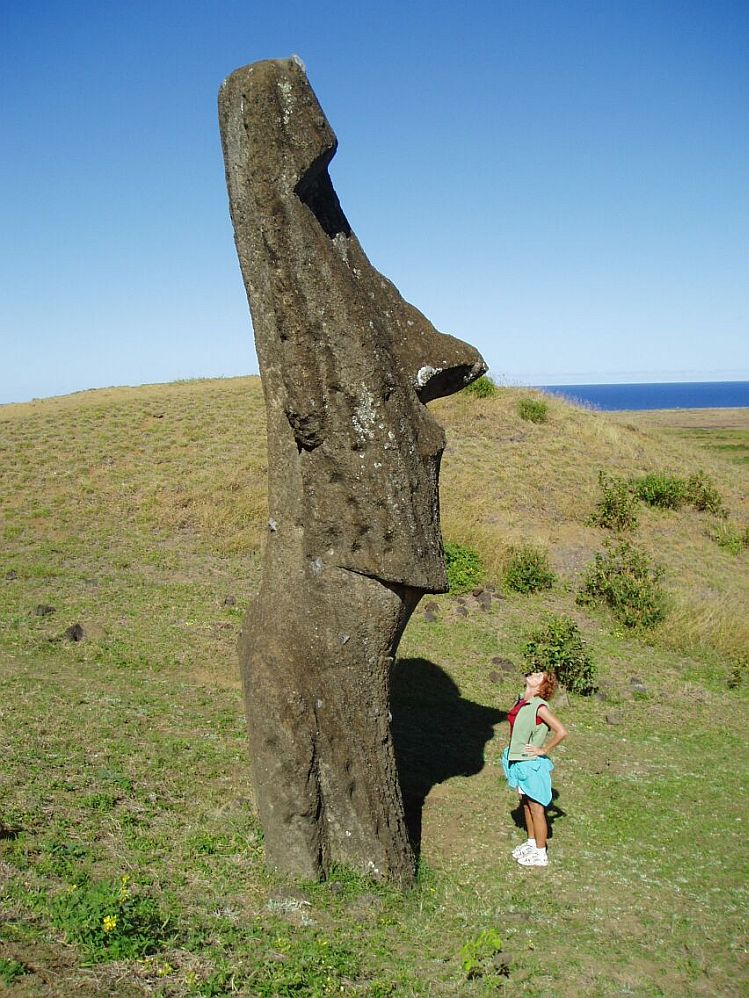


(In fact there were some 400 statutes in and around according to the guide books). Some of these statues were buried so that only the head was showing and some towered with their bases sunk a couple of yards into the soil. We followed a trail that looked as if it had been used recently that wound its way up the hillside through the low vegetation (mostly a kind of yellow lupin). The trail was partly overgrown and at about the time we were wondering where we were going, we crossed the ridge-line into the crater of the volcano. The volcano had a freshwater lake with reeds along the edge and at it's far side we could see many more statues either standing or under construction. The view from the ridge with the crater below, small herds of horses grazing, the crater lake, the huge stone statues and the Pacific Ocean claiming the horizon in any direction, is a view I feel utterly inadequate to describe. It is a magical place and this was a magic day.
From the volcano, we saw in the distance an "ahu" (stone platform) with 15 erect statues (moai). We read later that this is the largest ahu
"Tongariki" and was destroyed by a tidal wave in 1960. It was restored 10 years ago by the University of Chile.


 We drove over, parked and explored the site. I sat cross-legged in front of the moais and pondered the huge figures. They in turn stared back at me.
Annette wandered around the back of the ahu and found a local cowboy washing his horse in the sea. She chatted with him and he told her that the
horse was his sole means of transportation and that he always washed his horse in the sea at that spot. Two van loads of Japanese tourists
showed up. Our "wa" was destroyed. Time to leave.
We drove over, parked and explored the site. I sat cross-legged in front of the moais and pondered the huge figures. They in turn stared back at me.
Annette wandered around the back of the ahu and found a local cowboy washing his horse in the sea. She chatted with him and he told her that the
horse was his sole means of transportation and that he always washed his horse in the sea at that spot. Two van loads of Japanese tourists
showed up. Our "wa" was destroyed. Time to leave.
That evening we ate at a sidewalk cafe along the main street. It was entertaining for us just to watch the mixture of pedestrians, dogs, automobiles, motorcycles, and people on horseback. Nobody seemed to be in a hurry and the fastest movers were the cowboys cantering along the sidewalks.
June 25, 2004
Today we drove to the North end of the island to look at a Maui, that was next to one of the only two sand beaches on the island. It was unusual because it had been previously buried by sand dunes, thereby protecting the soft volcanic rock from erosion. As I mentioned earlier, the statues had been pushed face down from their platforms more than a hundred and fifty years ago. This meant that the exposed backs of the statues had taken the full brunt of the elements. For the first time, we were able to view the elaborate carvings and decorations on the back of the statues, as well as upon the stone facings of the platforms. I had heard that the Japanese were experimenting with some kind of plastic spray to prevent further elemental damage but there was nothing about this in the literature we picked up. Unless something is done, in another 1000 years or so, there will be nothing left but old photographs.


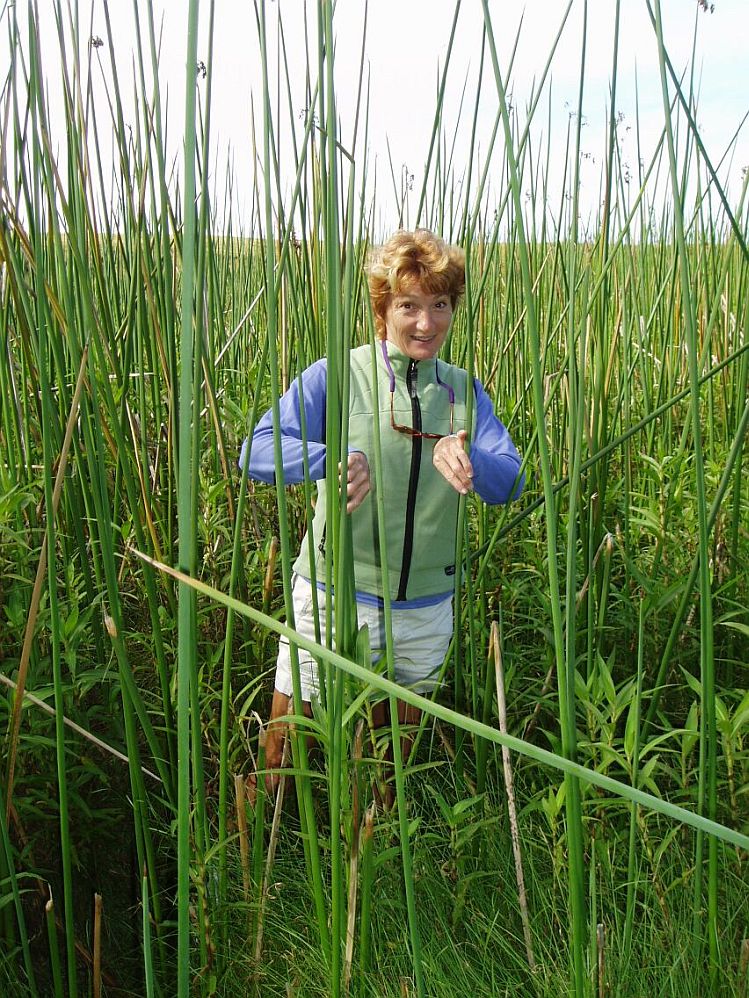

We next went "four wheeling" up the biggest volcano in the center of the island. There was a little used dirt track that ran through heavy woods and then continued steeply up to the crater rim. There were no signs anywhere giving directions and our only company were the herds of horses running free. We navigated by assuming that the crater rim would be "up" and selecting our trails accordingly. The crater lake was completely filled with reeds (literature claims pollen analysis indicates this has been true for at least 3,000 years). The crater was bounded on one side by a forest of eucalyptus trees (no Koalas). We wandered around in the forest and crater lake reeds until we ran out of beer and hunger finally drove us back to town.
June 26, 2004
It was blustery and raining when we awoke. Our Galapagos met French-historian-friend "Pierre" had asked Annette if she
would take some photographs for him of certain artifacts. The last of these was a volcanic "bomb", alleged to be magnetic and a power portal for the
whole universe - or at least a couple of gullible tourists. Pierre had provided a crummy sketch map and a couple of tourists who had seen it, supplied
hazy and conflicting directions. Armed with this information, we set off in the rain in our four wheel drive rental car. We saw no other traffic
and had to slow and wind our way between herds of horses on the road. We arrived at the North coast and

 explored several possible trails. The trails were potholed, waterlogged, and extremely slippery with a reddish clay
mud. We scraped past thick vegetation, while slipping and sliding up and down steep hills in low ratio, four-wheel drive. Eventually we found the
thing! It must have been the real McCoy because the battery in Annette's camera died after the third shot. When we arrived back at our hotel, our
fellow guests (the only other people staying in the hotel) where aghast at what we had done to a formerly white car. We found a piece of cardboard in the
trash plus a garden hose and washed the worst of the mud off.
explored several possible trails. The trails were potholed, waterlogged, and extremely slippery with a reddish clay
mud. We scraped past thick vegetation, while slipping and sliding up and down steep hills in low ratio, four-wheel drive. Eventually we found the
thing! It must have been the real McCoy because the battery in Annette's camera died after the third shot. When we arrived back at our hotel, our
fellow guests (the only other people staying in the hotel) where aghast at what we had done to a formerly white car. We found a piece of cardboard in the
trash plus a garden hose and washed the worst of the mud off.
 That evening we attended a floor show of "native" dancing. This was certainly one of the best shows we have seen. Annette said the style (she is the
expert) was almost a mix of Polynesian and Maori styles. The girls were pretty and seemed to be thoroughly enjoying what they were doing. The
guys were certainly very energetic and enthusiastic.
That evening we attended a floor show of "native" dancing. This was certainly one of the best shows we have seen. Annette said the style (she is the
expert) was almost a mix of Polynesian and Maori styles. The girls were pretty and seemed to be thoroughly enjoying what they were doing. The
guys were certainly very energetic and enthusiastic.
June 27, 2004
Our flight back to Papeete was in the evening. When I attempted to return the rental car to the agency, I found the front tire
was flat. I began to drag out jacks and wrenches etc. but Annette convinced me to just call the agency. Sure enough they send around a young
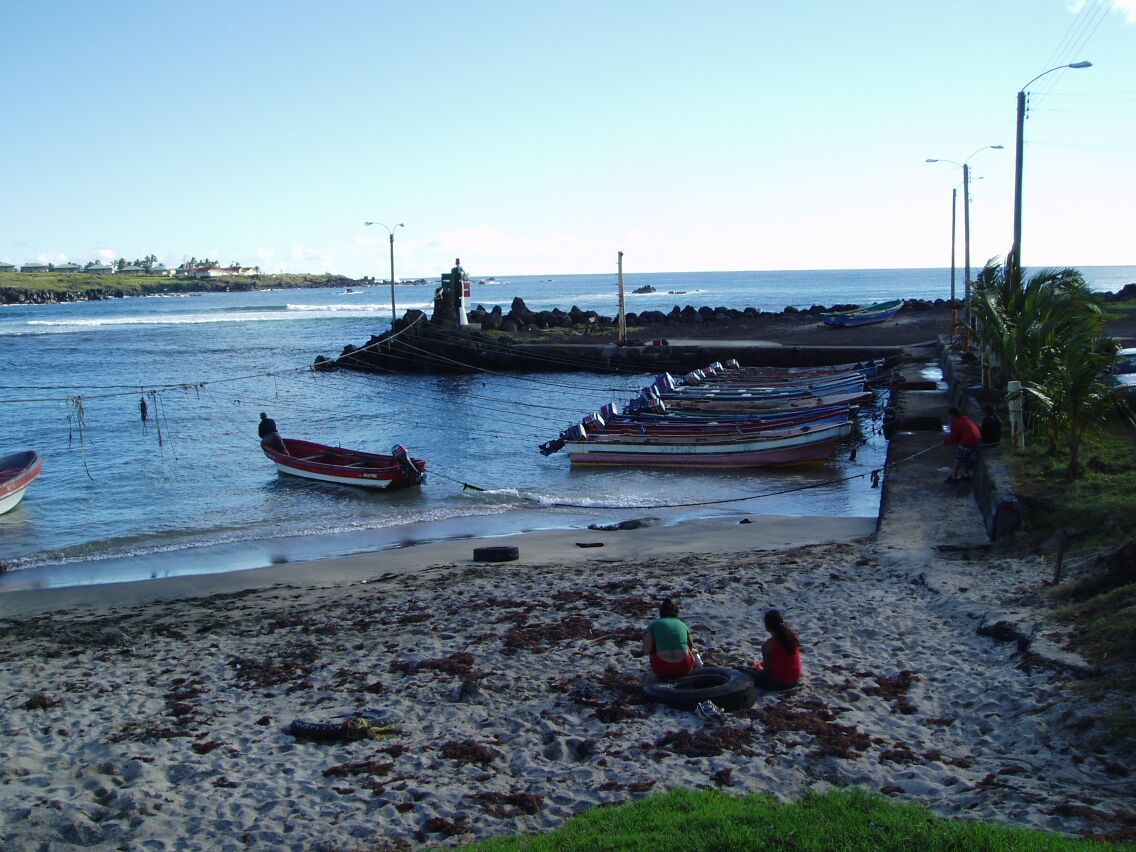
man on a motorcycle who very efficiently got himself dirty. After lunch we still had time to kill so we headed towards the nearby harbor. We stopped
to watch a soccer game in progress. In my opinion, the players were quite good and it was an exciting game. The Pacific waves were crashing onto the
rocks across the road, while horsemen cantered around the pitch. Occasionally a stray dog would also wander across the pitch and while the game
was in progress, several teenage kids were having their own game in one of the corners. We watched children setting down bicycles along the side-lines
and we were fascinated to watch a toddler, wearing a diaper and kicking a tiny soccer ball. He was very good and kicked the ball quite accurately back to
his older sibling, who was throwing him the ball. Our fascination was that he was actually on the pitch and this was a real game in progress, with referee,
linesman and 22 very large and active players. Just when we expected the kid to be creamed, an older child would leisurely stroll onto the pitch, scoop
up the infant and haul him off - a hairsbreadth away from certain death.

 The game finished and a second game started. We wandered off and missed the best part, when after the referee had awarded two unpopular fouls in a row,
one of the teams marched resolutely off the pitch.
The game finished and a second game started. We wandered off and missed the best part, when after the referee had awarded two unpopular fouls in a row,
one of the teams marched resolutely off the pitch.
The flight back to Papeete was relatively uneventful. Our highlight was in the departure lounge where we were accosted by an inebriated woman, who insisted that the archaeologists were all wrong. The Easter Island statues were over 5,000 years old. She further maintained that there were dinosaur remains on Easter Island. They had survived there from the "crustacean period". Yummy! "Joe's Crab Shack" look out!
back in the Society Islands....
June 28, 2004
Late evening found us back in Raitatea after spending the night in Papeete. We were gratified to find DoodleBug back in the water, seemingly intact and with the requested work completed. These were maintenance items I had intended to do in New Zealand but decided needed to be completed earlier, when the propeller "Z" drive showed signs of sea water leaking into the oil. We had the "Z" drive seals replaced, bow thruster serviced, and the hull painted with its annual coat of anti-fouling paint.
June 29, 2004 thru July 1, 2004
We did our laundry (well....at least I put my undies in the hamper), talked with the technician about the work done on the DoodleBug, copied our photos onto CD's, checked lots of e-mails, grocery shopped (why is it that beer and wine weighs so much?), paid our boatyard bill and prepared to leave.
July 2, 2004
Position: 16 36.4 S 151 33.6 W
We left the boatyard at 0900 and motor-sailed around the island of Tahaa. I had read in the guide books about an
anchorage on the North side of the island. When we arrived, the location was filled with pearl oyster marker buoys. Tahaa has few usable anchorages so
 we continued our counter-clockwise circumnavigation down the West coast. Just opposite a fancy hotel "Le Taha'a" we found a marginal location
to drop our hook but did so anyway at 1245 hours. We dinghied up to their dock, marched up to the reception and made dinner reservations for the evening.
I have no idea what the rooms look like but it seems like a pretty neat place to stay.
we continued our counter-clockwise circumnavigation down the West coast. Just opposite a fancy hotel "Le Taha'a" we found a marginal location
to drop our hook but did so anyway at 1245 hours. We dinghied up to their dock, marched up to the reception and made dinner reservations for the evening.
I have no idea what the rooms look like but it seems like a pretty neat place to stay.
July 3, 2004
Position: 16 29.4 S 151 45.6 W
Last night's dinner at the hotel "Le Taha'a" was memorable. It has been one year and over 8,000 miles, since we left Ft. Lauderdale with DoodleBug. It was also the anniversary of the sale of our company. We decided that we would dine at the gourmet restaurant at the hotel and chose the chef's choice five course meal. The first course came out and it was a beautifully decorated plate with a single scallop and a demitasse teaspoon with mashed potatoes in it. I was thinking how artistic it was and that it would probably be just as artistic with maybe....two scallops?
Early that morning, I was dangling 70 foot in the air at the top of our mast. I had just changed out a burned-out anchor light bulb and was
 now taking photographs, when Roger and Nancy from the boat next to us, "Equanimity" from Portland, Oregon, dinghied by to chat. They had received a
weather report indicating several days of bad weather heading our way. Since we were at a marginal anchorage, we decided to sail to Bora Bora and find better
shelter.
now taking photographs, when Roger and Nancy from the boat next to us, "Equanimity" from Portland, Oregon, dinghied by to chat. They had received a
weather report indicating several days of bad weather heading our way. Since we were at a marginal anchorage, we decided to sail to Bora Bora and find better
shelter.
We set sail at 1120 hours and sailed the 20 miles to Bora Bora. The weather was fine with the wind off our stern quarter gusting up to 20 plus knots. We picked up a mooring at the Bora Bora yacht club at 1530 hours. Our current position is 16 29.4 S 151 45.6 W.


During the night there was a huge bang and sound of escaping gas from the direction of the main cabin. I had left the generator running with an alarm timer in order to charge the batteries but I was now fast asleep. I hurled myself out of bed and rushed in the direction of the noise but could not think of any boat system that could make this kind of noise. Annette had followed me and as I was shutting down the generator and turning off the pressurized fresh water system, she pointed out that the hissing noise was coming from the forward locker where we keep the scuba tanks. One of them had blown a seal or something and was discharging compressed air. Back to bed, figure it out tomorrow!
July 4, 2004
Today was a Sunday - everything in French Polynesia was therefore "closed" - a day to hang around doing boat chores. We invited the crew of "Equanimity" to join us for supper and within an hour or so, this invitation had grown to include the crews of "Cats Paw" and "Adagio" - all American boats. It was a fun evening with a traditional American dish of Couscous plus several bottles of champagne. I had thought about using flares for fireworks but I had a vision of accidentally setting fire to a nearby French catamaran, thereby sparking an international incident.
July 5, 2004
Early this morning, Vanessa and Cullum swam over from "Adagio" to bring us a business card. We provided a towel and a cup
of coffee before tossing them back overboard.

 We rode our dinghy into the next village "Vaitape" to check in with the local Gendarme. Predictably, the Gendarme said, this wasn't necessary and to
check in when we leave for our final departure documents. As we arrived at the village, we witnessed the start of a canoe race. This was "ladies
sixes". Six ladies in each of eight or ten outrigger canoes. The ladies wore sarongs and had flower headdresses. The crowd on the dockside
was extremely enthusiastic and it became obvious that the teams were from different local villages. The race began with the blowing of a horn -
sounded like a conch shell but Annette said it was an air-horn. As soon as the start
We rode our dinghy into the next village "Vaitape" to check in with the local Gendarme. Predictably, the Gendarme said, this wasn't necessary and to
check in when we leave for our final departure documents. As we arrived at the village, we witnessed the start of a canoe race. This was "ladies
sixes". Six ladies in each of eight or ten outrigger canoes. The ladies wore sarongs and had flower headdresses. The crowd on the dockside
was extremely enthusiastic and it became obvious that the teams were from different local villages. The race began with the blowing of a horn -
sounded like a conch shell but Annette said it was an air-horn. As soon as the start

 signal was given, the drummers on the dock began a furious rhythm and the ladies streaked off into the distance. I don't know where the turn
around point was but when the leading canoe was some hundred yards or so from the finish line, the drums began again to beat a furious rhythm, the closer the
girls got to the finish line, the faster the beat. I was pleased to note that all contestants were "drummed" across the finish line.
signal was given, the drummers on the dock began a furious rhythm and the ladies streaked off into the distance. I don't know where the turn
around point was but when the leading canoe was some hundred yards or so from the finish line, the drums began again to beat a furious rhythm, the closer the
girls got to the finish line, the faster the beat. I was pleased to note that all contestants were "drummed" across the finish line.
Early that afternoon we walked back into town to rent a car. We had stopped by the rental agency earlier and had been told to return at 1700 hours. Annette shopped while I read a newspaper I had purchased - the Herald Tribune from July 2nd - my first newspaper in 6 months. At 1700 hours the car rental lady told us she had no cars available. By now we have been in French Polynesia long enough to not even get too annoyed. We "auto-stopped" back to the Bora Bora yacht club and decided it was way too windy for a long dinghy excursion back to town to see the dancing that evening.
July 6, 2004
I went scuba diving with "Top-Dive" and Annette took the dinghy to town to get more groceries (of the Chardonnay variety). Rodger from "Equanimity" and Tom and Fidel from "Cats Paw" had also signed up for the dive, which was just outside of the pass into Bora Bora. As I descended from the surface, I was amazed at how clear the water was and could not help thinking how far away those sharks were able to see me. There were sharks everywhere it seemed! I divided the sharks into two categories "big sharks with teeth" (black tip sharks) and "very big sharks with teeth" (lemon sharks). One of the dive leaders ("Lefty") was hand feeding the sharks with a large and very dead tuna. He was surrounded by clouds of smaller fish voraciously tearing at the tuna and occasionally one of the big boys would slide in and grab a mouthful. Finally a huge lemon shark swam up to the tuna, rolled on it's side and opened it's jaws - just like in "that" movie - and took the whole carcass. It then swam away pursued by the rest of the crowd. The scuba divers also dispersed and I watched as a huge lemon shark swam directly at me and then under me, passing a couple of feet away. The reason Annette is still alive today is entirely due to her strong biologic urge to go shopping instead of scuba diving. It's not good to freak at 70 feet underwater. I meanwhile tried to insert myself into the middle of a group of divers on the theory that the eating would be from the outside in.
Later that day, Rodger and Nancy from "Equanimity" came by to help us eat shrimp. It began to rain quite heavily but we didn't pay a whole lot of attention since we were distracted by the food and the fact that boats are designed to be waterproof. When it came time to leave, flashlights showed that "Equanimity's" dinghy contained about 8 inches of rain water and it was approaching the gunnels. "DoodleBug's" dinghy was alongside but appeared strangely dry. This is because our dinghy has an inflatable floor insert, which was now floating on about 8 inches of water.
July 7, 2004
We picked up a rental car this morning (different company) and set out to tour the island. Bora Bora was a major US supply and refueling base during WW II and besides the huge airstrip that is still in use, there were 8 huge Mark II naval guns (7 or 8 inch caliber)left in emplacements around the island. The weather was still cloudy, blowing hard and coolish - perfect weather for car touring. The location we tried to find was behind a hotel. We asked at the hotel where we could find the guns. "They are finished, gone!" "You mean you moved the 8 inch guns?" "Well no.... it is interdite (forbidden). The road is closed. It is private. You must take a tour by 4 wheel drive." We moved on following direction in a battered 1996 travel guide. The next location we tried took us by the trash dump. Annette likes trash dumps. We stopped next to the pile of discarded batteries and asked two workers if the trail that went from the spot we were standing at and then about 60 yards up to the ridge-top, would eventually lead us to the guns. "No, you must go back to the main road. Then to the top of the hill between the two houses." OK, we followed their instructions and found a likely trail. This was less than a footpath along the ridge top and hard to follow. After about a half mile or so, we arrives at a clearing and looked down a trail at the pile of batteries in the dump about 60 yards away. The two guns were just to our right and really neat to explore. Their long barrels pointed forlornly across the blue waters of the lagoon and out to the Pacific horizon.

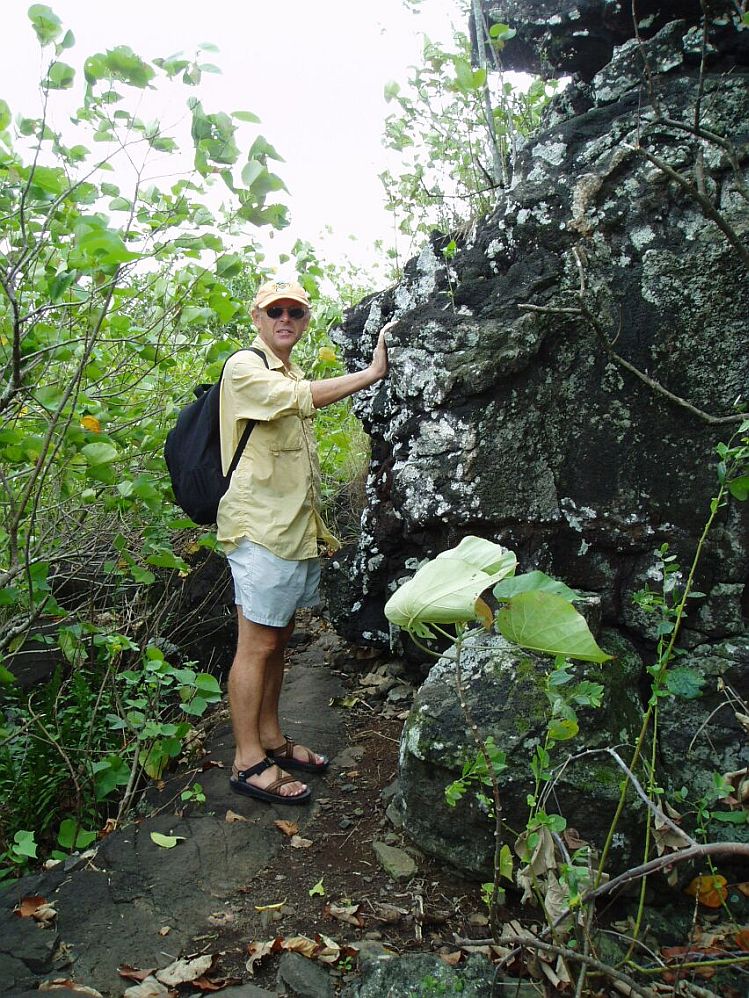

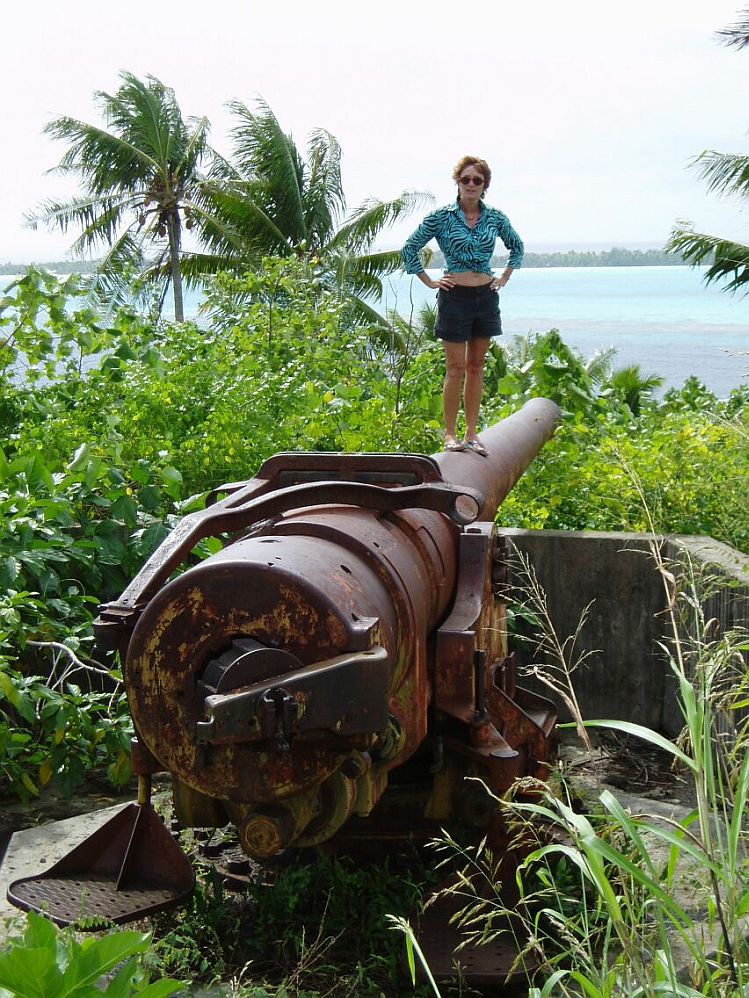

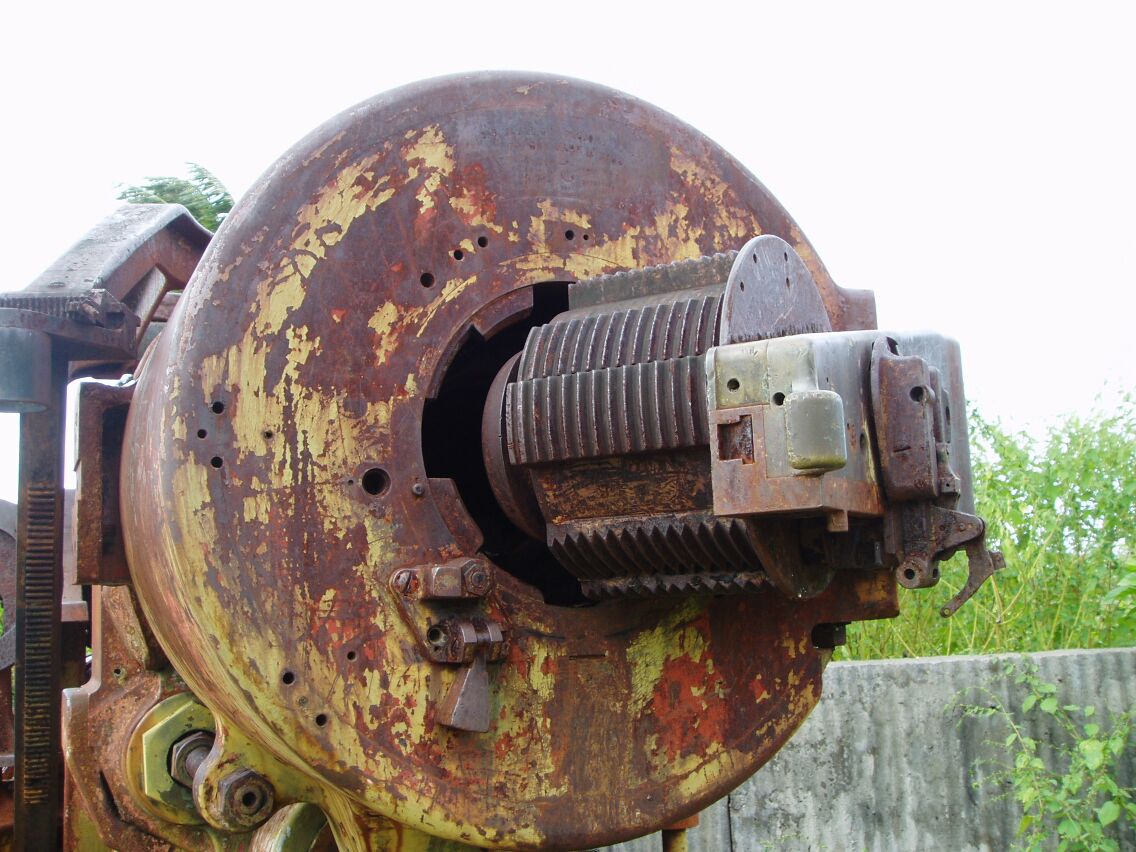
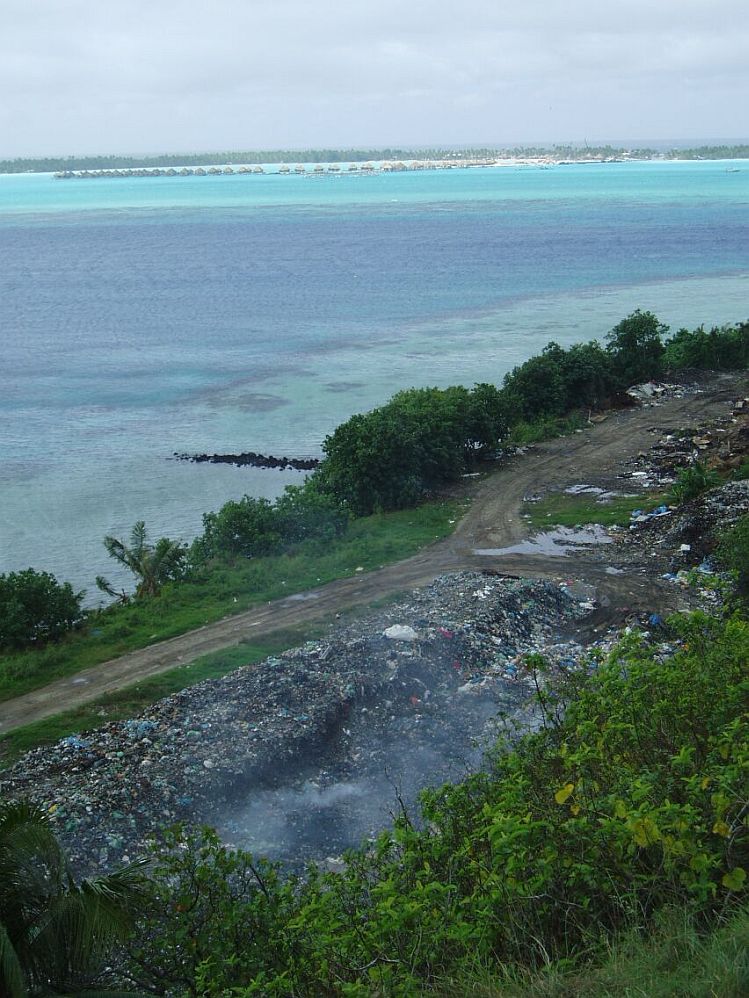
I related the odd story of the dump worker's directions to a storekeeper later that day and he said, "Bora Bora is a peaceful island and we do not like war things." This is strange when every second hotel is called "Bali-Hai" and the bars are called "Bloody-Mary's." Didn't they actually watch the movie? I asked another long term resident if the reason they do not publicize their WW II installations, is perhaps they don't want to offend the Japanese tourists who make up about 20% of the total. His response was, "Yes." As we drove around the island, the wind varied from gusting to howling and the lagoon waves beat against the shore. We were concerned that the conditions at DoodleBug had changed radically since we left but when we returned, it was still relatively calm and sheltered just off the yacht club. That evening we drove our rental car into town to see the Heiva celebration dancing. The dancers were wonderful as usual but the wind was so strong, chairs and pieces of the theatre were blowing away. I was mildly interested to see if the costumes would stay attached to the girls. They did. By the second act, it was decidedly colder so we saw a couple of dances and split. We had to wash the sea spray from the windshield of the car and ran the heater full blast for the couple of miles back to the yacht club. Hot cocoa time!
July 8, 2004
This morning dawned with blue skies, sunshine and slightly less wind. We have decided to leave Sunday, weather permitting.We took our errant
scuba tank to the dive shop to see if they could refill it. No repair parts available but they did confirm that the over-pressure release
valve had blown out.


 Annette wanted to see the shark feeding but she is way too chicken to get into the water, so I booked a tour for Saturday by
submarine. We refilled our diesel cans and in the process, discovered that another set of naval guns is right behind
and visible from the anchorage. We loaded bug-spray and beer into a knapsack and hiked up the ridge and along the ridge-line from the yacht club for another
spectacular view of the lagoon. The two huge guns are of course covered in graffiti but still in reasonable condition.
Annette wanted to see the shark feeding but she is way too chicken to get into the water, so I booked a tour for Saturday by
submarine. We refilled our diesel cans and in the process, discovered that another set of naval guns is right behind
and visible from the anchorage. We loaded bug-spray and beer into a knapsack and hiked up the ridge and along the ridge-line from the yacht club for another
spectacular view of the lagoon. The two huge guns are of course covered in graffiti but still in reasonable condition.
July 10, 2004
We began the checkout procedure today, since the banks etc. are going to be closed for the week-end. The first stop was to the Gendarmes office to get an exit stamp in our passports, plus our "zarpe" or clearance document that is required for the next port of entry. The third item we needed was a customs validation to state that we were exporting the various tax-free items we had bought over the past several months. When you buy a tax-free item, they charge for the purchase price, plus another charge slip for the tax portion. If you fail to provide the customs validation within a certain time period, the charge for the tax is put through on your credit card. The customs agent had no clue as to what we were talking about with our five claims. Nevertheless, we insisted that the forms be stamped. They finally did so grudgingly. We returned to one of the stores and the proprietor explained that the customs agents are changed every three months - this group was new and did not know the procedure.
Next stop was the bank to reclaim the $2,300 bond we had to place in Papeete to ensure we left Polynesia. Since we had bought the bond with US dollars cash and paid a hefty commission, we were assured in Papeete that the bond would be repaid in US dollars cash in Bora Bora and there would be no commission on the refund. Naturally and despite strenuous argument, the Bora Bora bank charged us the commission again and had no dollars available. We were luckier than the next cruiser, since we were able to finally get dollars at another bank but they were stuck with Euros. Time to leave!
July 11, 2004
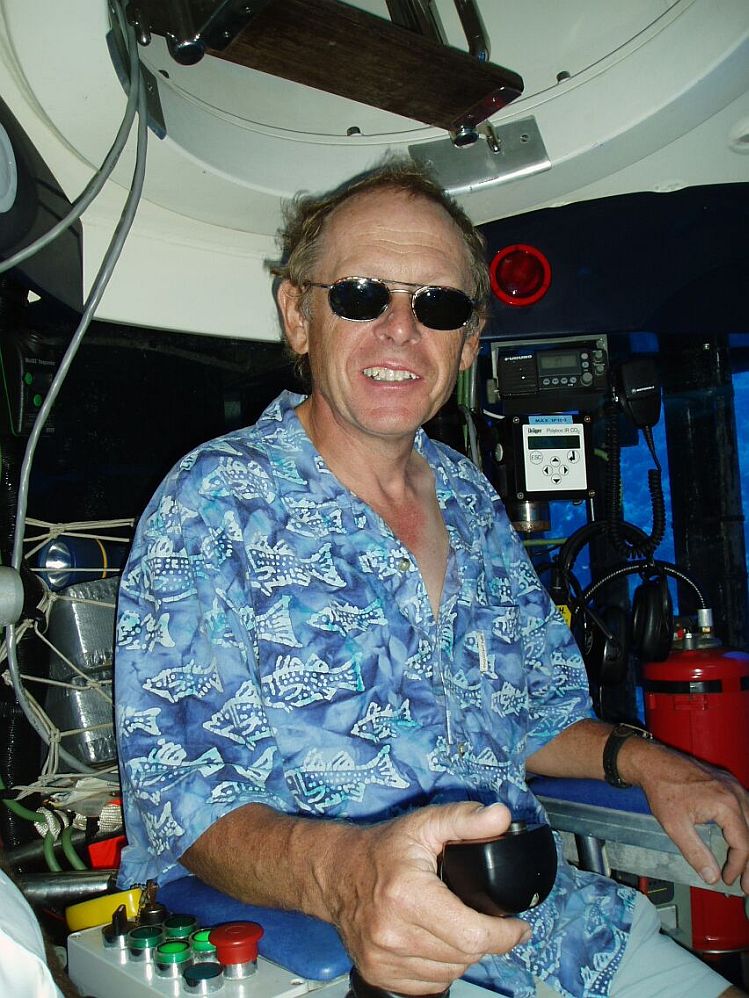
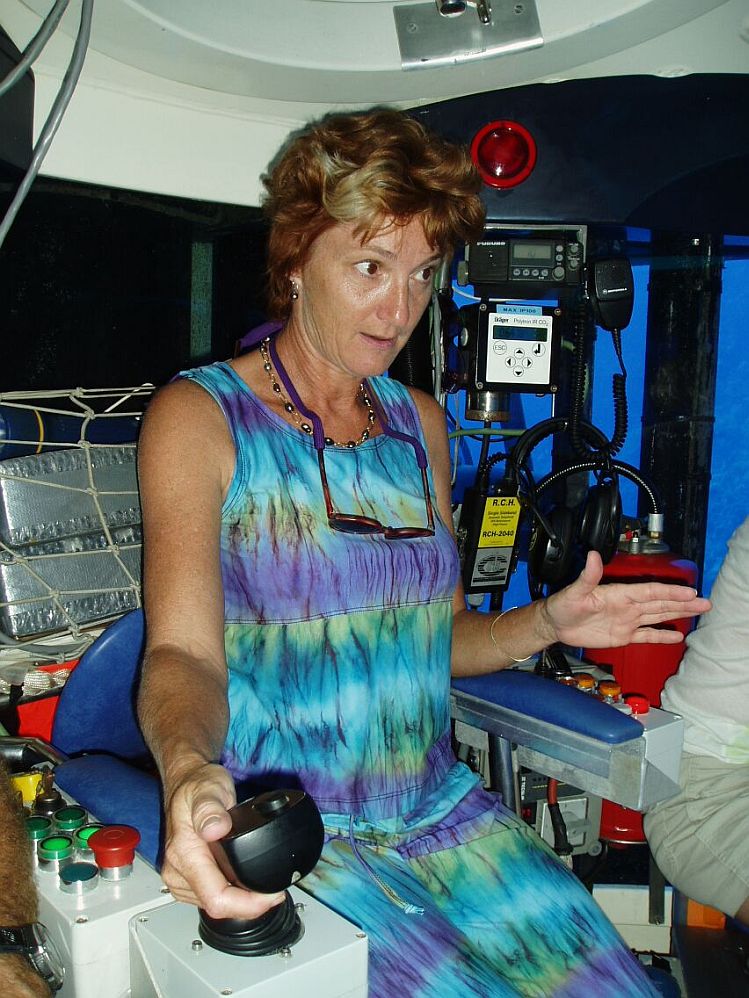
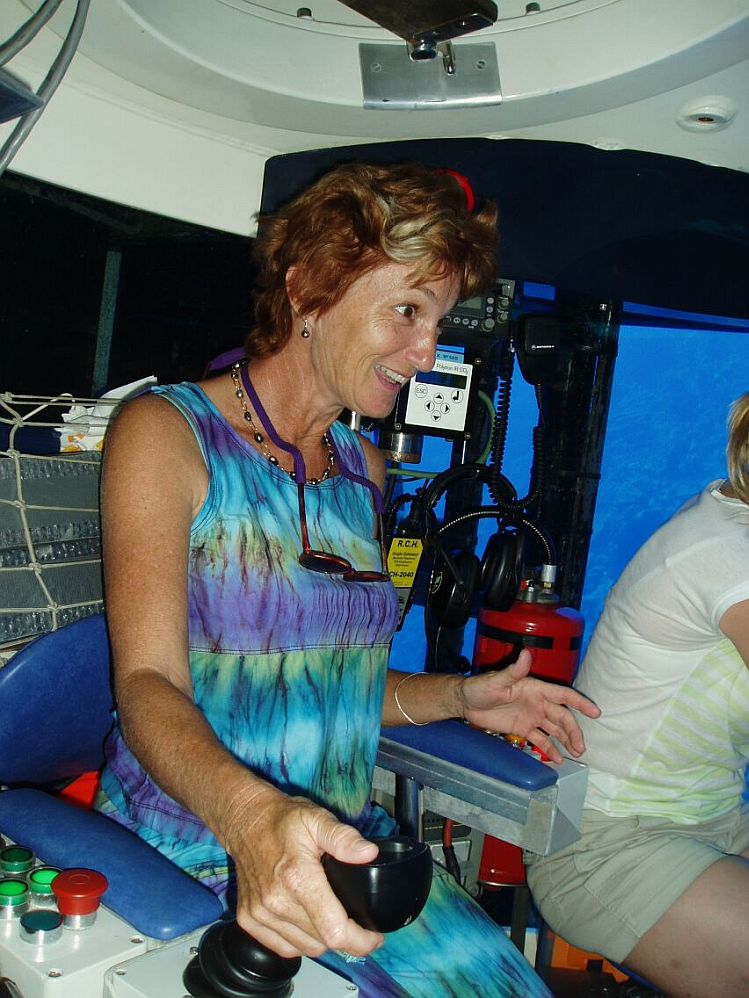
We had pretty much prepared the boat for departure on Sunday morning and had booked a noon-day tour by submarine of the coral reef outside of the lagoon. The submarine held six people plus operator and dived to just over 100 feet. At this depth the red end of the light spectrum is filtered off by the overlying sea water and everything looks blue until the submarine turns on it's flood-lights. The fish were stunning with their colors, their shapes, their variety and their numbers on the reef. We saw lots of black-tip sharks, a 16 foot lemon-shark that Annette failed to see, Barracudas, Remoras, Tuna, Groupers, Nemo, Dori, etc. etc. The view was overwhelming, in that you just don't know what to look at, since you know you are missing a lot. The colors of the coral, anemones, clams, rocks and the mysterious dark blue of the deep. We both got to drive the submarine - whoopee!!! This is a real sub with a pressurized oxygen environment and carbon-dioxide scrubbers, just like a space-craft. Altogether a fun trip and an upbeat way to remember the beauty of these Islands.


(logged later that day...)
0900 hours we slipped our mooring at the Bora Bora yacht club, passed out of the reef and set sail for Penrhyn in the Northern Cook Islands. There was a swell of 8 foot or so from the east / southeast that produced an awkward motion as it passed the stern but overall it was a quiet sail. No other vessels in sight since we left. We broad-reached all day but at 1700 hours the wind picked up to 20 plus knots and I had to wake Annette up (who had just gone to bed) so that she could help me take down the pole system we were using to pole out the Genoa. The boat was rolling more and I stayed reefed down all night long but still sailing at 7 knots. The night was cloudy and dark and at 0330 hours a "Cheshire Cat" moon rose in the East, casting a silver path across the waters but failing to dispel the gloom of the confused seas.
